
Broadcom today extended its orchestration framework to add support for multiple artificial intelligence (AI) agents that are being deployed across a wide range of workflows.
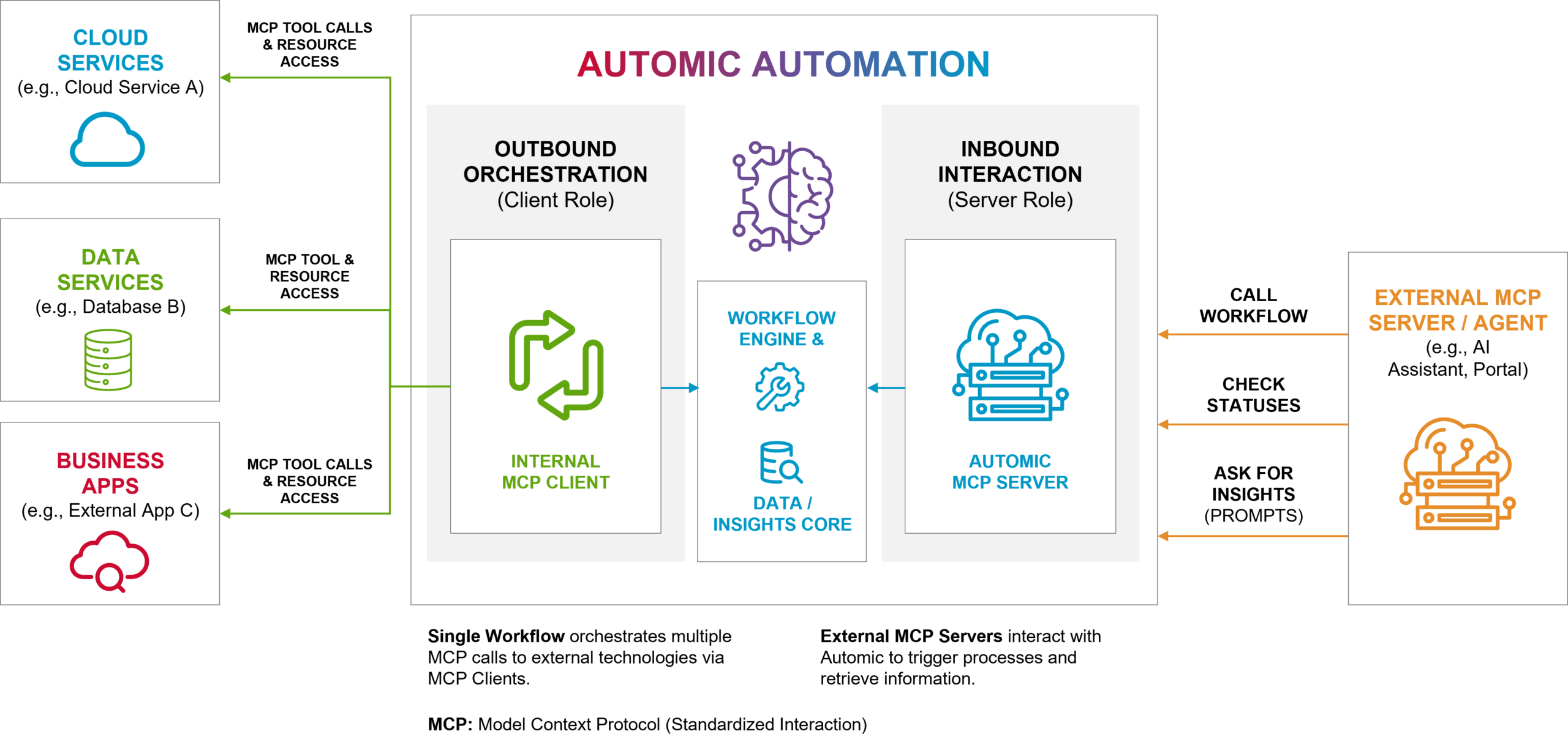
The Automic Automation v26 platform includes both a Model Context Protocol (MCP) server to enable AI agents to invoke the Broadcom platform and MCP client software that enables the platform to invoke third-party MCP servers.
At the same time, Broadcom has added support for the Python programming language to make it simpler to construct pipelines that can be automatically applied using the Automic Automation platform.
Finally, Broadcom has added support for a natural language interface through which text can be used to construct workflow pipelines.
Collectively, that capability makes it possible for organizations to extend the Broadcom orchestration framework to AI agents that are starting to proliferate across the enterprise, says Rajeev Kumar, head of products for workload automation at Broadcom.
For example, a software engineering team could use Automic Automation to orchestrate DevOps workflows, while a business analyst might use vibecoding tools to automate a workflow they define.
The overall goal is to provide IT teams with an orchestration framework that, in addition to making it simpler to automate workflows and processes, also provides the ability to govern them, including rolling back actions whenever a mistake is made, says Kumar.
That same core capability also provides the framework through which agentic workflows can now be audited, he adds.
Ultimately, the rise of agentic AI will drive more organizations to deploy orchestration frameworks that at the same time are becoming simpler to deploy and manage. In effect, IT teams can now rely more on AI to manage an orchestration framework that in turn provides a higher level of abstraction through which workflows can be created and updated.
It’s not clear at what point the number of AI agents being deployed will force organizations to revisit how their workflows are orchestrated, but the cost of building and, just as importantly, modifying workflows is rapidly declining. It is also becoming easier to capture the tribal knowledge surrounding a workflow in the AI era, notes Kumar. As such, many more organizations are likely to now launch digital business transformation initiatives in the age of AI, he adds. “Up until now business processing reengineering has been tough,” says Kumar.
Regardless of approach to orchestration, there is a world of difference between assigning a task to a single AI agent to perform and the management of an end-to-end process. As thousands of AI agents are strewn across the enterprise, the number of fragmented processes and workflows that exist today are going to become a lot more apparent, notes Kumar. The challenge and the opportunity now is to use AI to unify them, he adds.
Hopefully, there will come a day soon when workflows can be reliably automated at scale using AI agents. In the meantime, however, organizations should be pushing the orchestration envelope to better understand exactly where in the middle of workflow there is still a need for human oversight.
