
Ukraine is solidifying its reputation as “Drone Central” by giving domestic and international partners access to real battlefield data to train AI models, according to Ukraine’s defense ministry. Described as a global first, the move is designed to accelerate the development of autonomous drones and related combat systems.
Under the new program, a dedicated AI platform at Ukraine’s Innovation and Defense Technology Center would provide secure access to millions of annotated images and video clips derived from tens of thousands of combat missions. AI models participating in the initiative can be trained using real-world battlefield conditions to improve targeting and situation assessments, thereby increasing the speed of the decision-making process during military operations.
For its part, Ukraine believes the sharing of AI data will improve the performance of its own drones. The new initiative builds on existing Ukrainian AI applications employed by its Delta battlefield computer system which uses neural networks to automatically identify ground and aerial targets. Ukrainian sources are emphasizing drone autonomy development but in practice, Ukrainian drone operators currently don’t grant drones full autonomy as an AI can make mistakes that might lead to friendly fire casualties. Drones already are responsible for most of the casualties in the Russian/Ukrainian conflict.
Ukraine’s AI offering also is driven by maintaining an edge over Russia. “In modern warfare, we must defeat Russia in every technological cycle,” said Ukraine’s defense minister Mykhailo Fedorov. “Artificial intelligence is one of the key areas of this competition.”
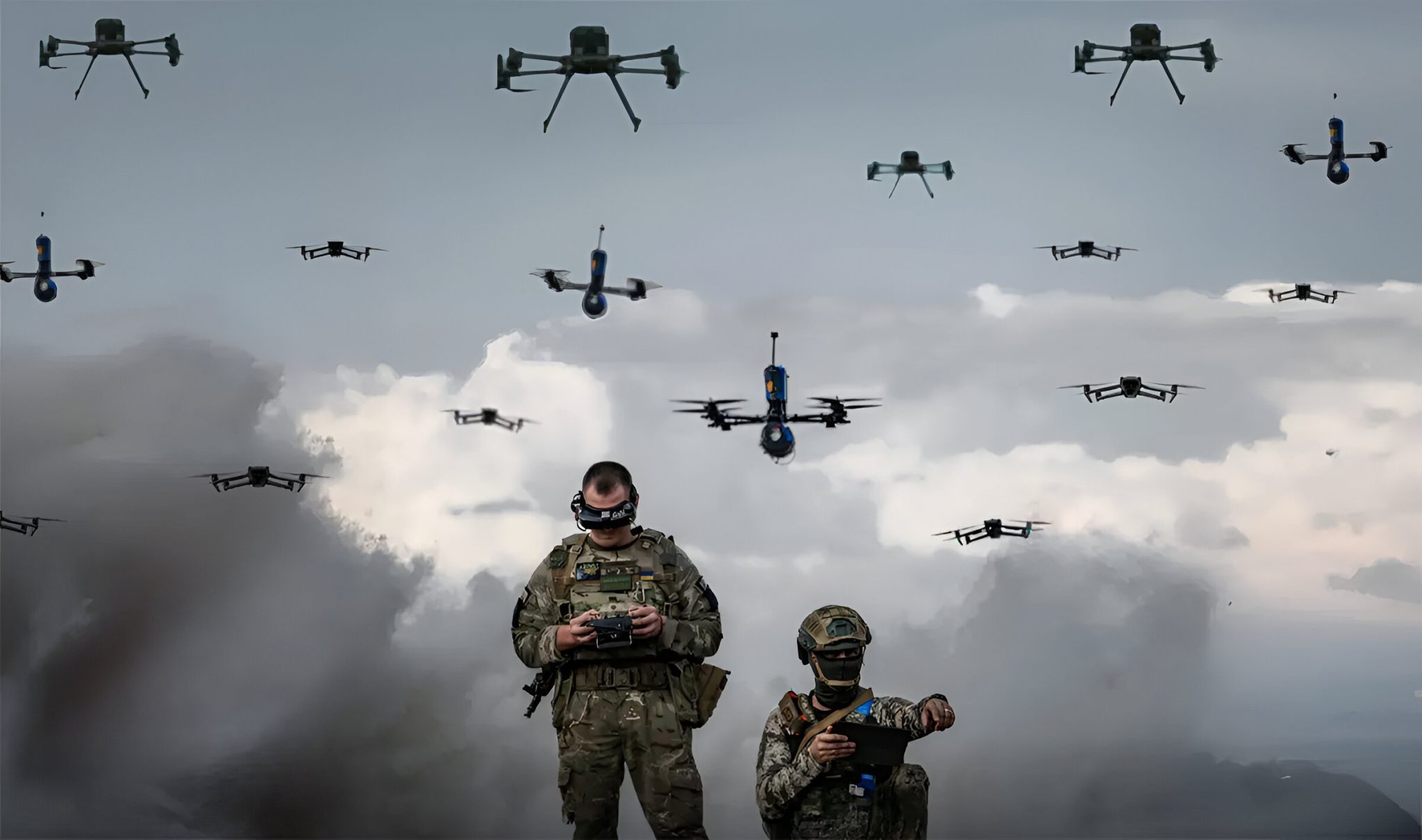
Credit: Ukraine Ministry of Defense
Also seeking an edge are a host of Middle East countries who are now contacting Ukrainian drone companies to counter to Iran’s drone assault on their own countries. Ukraine’s low-cost drone manufacturing capability is now so enormous that it can afford to export drones to other countries. Of particular interest are Ukraine’s anti-drone capabilities as a defense against Iranian Shahed drones which have wreaked havoc across Gulf States like Saudi Arabia, UAE, Kuwait and others. Some Ukrainian drone makers are touting a subscription model rather than just a straight sales transaction, according to the New York Times, that would include ongoing software updates and varying mission-specific hardware configurations. Ukraine has reportedly sent air defense teams to Saudi Arabia, Qatar, and UAE that analysts see as a prelude to long-term business deals. Low-cost, AI-assisted drone interceptors in the range of $2,000 each are seen as an effective alternative to the use of high-priced missiles actually designed to defend against more explosive threats like ballistic missiles.
Ukraine’s sometimes unconventional approach to drones and drone defense often yields successful low-cost solutions. Ukraine is currently experimenting with slow-flying crop dusters equipped with missiles to defeat drones, for example. In any event, the pressure to innovate is enormous with technological superiority measured in weeks. Among the newer threats being addressed, for example, is Russia’s new jet-powered Geran-5 drone, which can reach speeds of up to 370 mph, a hint that the next frontier in drone technology may be about speed. On the Ukraine side, unconfirmed reports suggest Ukraine is testing the use of lasers to cut the fiber optic cable used by drones as a communications alternative to jammed RF signals.
Ukraine’s tech expertise in the drone arena is exemplified by the results of the Pentagon’s just-completed Drone Dominance competition. While the overall far-and-away winner was initially attributed to a British start-up called Skycutter, it was subsequently revealed that Skycutter is a partnership with a Ukraine’s Skyfall drone manufacturer. Skyfall is capable of producing 50,000 drones per month. Skycutter will supply the Pentagon with an initial evaluation order of 2500 drones, according to media reports. Skyfall is reportedly looking to expand drone manufacturing to other European countries.
That Skycutter nod may have been politically driven given President Trump’s seeming aversion to all things Ukrainian. In response to a question from Fox News on March 13, Trump denied that Ukraine was assisting the U.S. military with drone defense. “No, they are not helping. We do not need their help. We know more about drones than anyone else. We have the best drones actually,” said Trump.
The U.S. is sending Merops drone interceptors to the Iranian war theater that have battle-tested in Ukraine and developed by Perennial Autonomy, a company linked to former Google CEO Eric Schmidt. The Merops system, reportedly costing less than $10,000 each, uses a fixed wing drone interceptor called Surveyor that is small enough to be launched from the back of a pickup truck.
Ukraine’s drone expertise will be on display in Washington, D.C. on March 25th at a Ground Truth Symposium hosted by the Peace Through Strength Institute, a foreign policy and defense think tank. Among the expected attendees are soldiers from Ukraine’s most effective drone squads like the Lazar Group, the 12th Special Forces Brigade, and the 414th UAV Brigade “Magyar’s Birds.” A number of major Ukrainian drone manufacturers also are expected to attend to provide invite-only briefings to congressional leaders and relevant U.S. government agencies. Among the potential new military uses for drones is their use as a tool in removing mines, a scourge that causes casualties long after a conflict has ended.
