
NVIDIA today at the SC 2025 conference previewed a family of open artificial intelligence (AI) models, dubbed Apollo, that enable data science and application development teams to integrate real-time capabilities into simulation software that will further physics research across everything from semiconductor development and weather forecasting to nuclear fusion reactors.
At the same time, NVIDIA also added a set of data processing pipelines and microservices that promise to make it easier to develop novel chemicals and materials by analyzing interactions at the atomic level. Organizations that have adopted these pipelines and frameworks include the Brookhaven National Laboratory and the U.S. Department of Energy (DOE), ENEOS and Universal Display Corp.
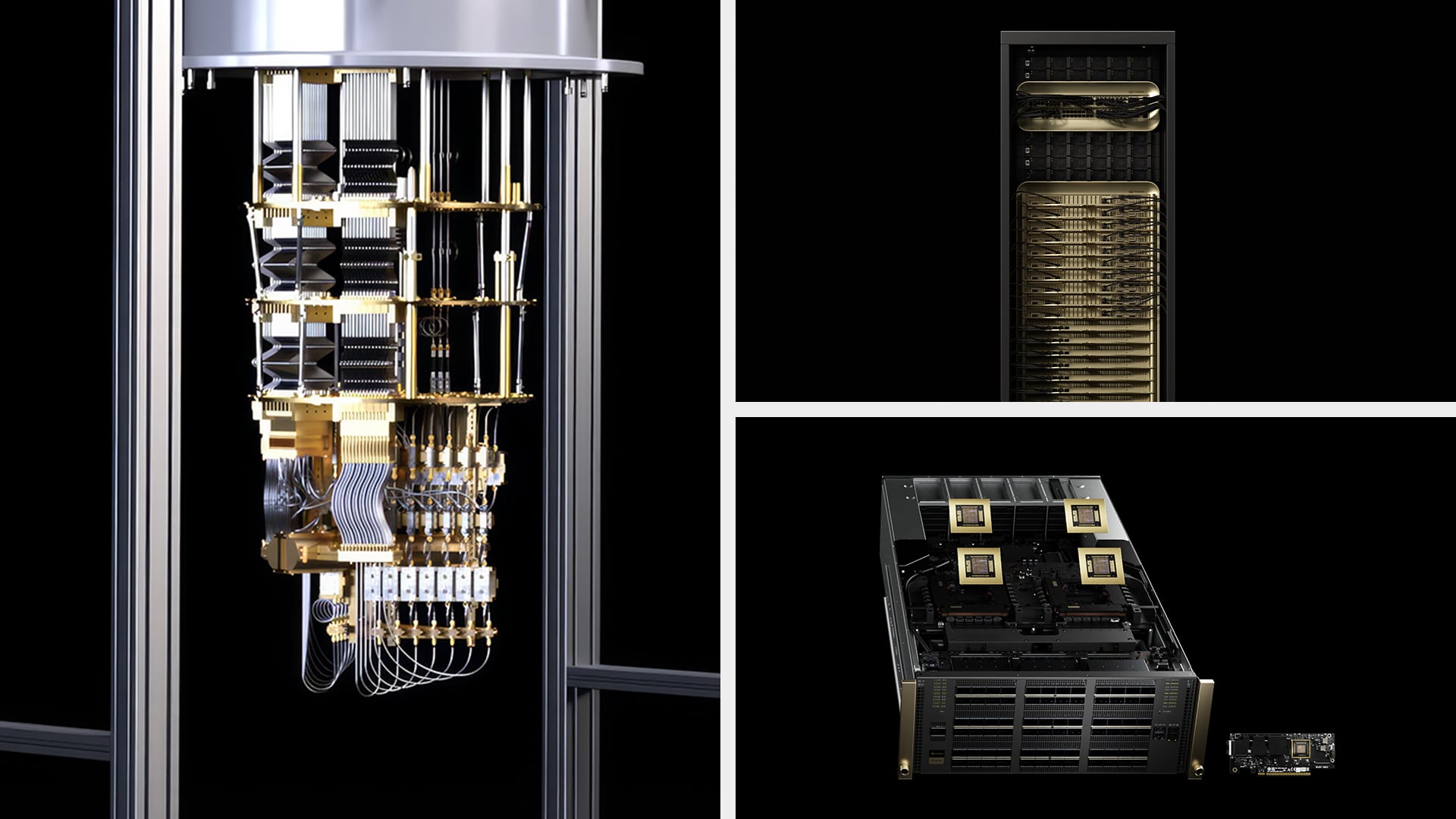
Finally, NVIDIA revealed it has developed a NVIDIA Quantum-X Photonics network interconnect for integrating AI platforms based on its processors with quantum computing platforms. The Texas Advanced Computing Center (TACC), Lambda and CoreWeave each committed to integrating these switches into their IT infrastructure platforms and services next year to eliminate the need for pluggable transceivers. The overall goal is to not only deliver 3.5x better power efficiency, but also provide 10x higher resiliency while enabling applications to run 5x longer without interruption.
Simulation software, AI and quantum computing are now the three pillars of modern scientific research, says Dion Harris, senior director of high performance computing (HPC) and AI Factory Solutions Go-to-Market (GTM) at NVIDIA. “We need a computing platform to accelerate these three pillars,” he says. “We’ve optimized the entire stack.”
At the core of that stack are Blackwell GPUs that will be followed by Rubin and Feynman-class GPUs that will be made available through the course of the rest of this decade, noted Harris.
In the meantime, Applied Materials, Cadence, LAM Research, Luminary Cloud, KLA, Northrop Grumman, PhysicsX, Rescale, Siemens and Synopsys have all committed to adopting the Apollo AI models to advance physics research across a wide range of vertical industry sectors. Each Apollo model will provide pretrained checkpoints and reference workflows for training, inference and benchmarking to enable organizations to build and integrate their own custom models.
NVIDIA is also betting that AI systems will play a critical role in spurring adoption of quantum computing systems. There are now more than 20 research organizations around the world that have committed to adopting the NVIDIA Quantum-X Photonics network interconnect.
Additionally, NVIDIA revealed there are more than 80 scientific systems powered by the NVIDIA accelerated computing platform that collectively provide a total of 4,500 exaflops of AI performance, including a 300-petaflop Horizon system that the TACC plans to bring online in 2026.
RIKEN, meanwhile, a research center based in Japan, is also working to deploy a system next year that will use 1,600 NVIDIA Blackwell GPUs, followed later by a quantum computing platform that will include 540 NVIDIA Blackwell GPUs.
It’s not clear just what scientific breakthroughs might be enabled thanks to the advent of AI and quantum computing, but the one thing that is certain is researchers are able to model forces of nature and physics that not too long ago would have been considered well beyond any ability to achieve.
