
Archetype is beta testing a toolkit for building artificial intelligence (AI) agents that are designed to be embedded directly into machines, infrastructure, and other IT environments.
Additionally, Archetype is making available three AI agents it built to monitor processes, ensure safer protocols are being followed and verify specific tasks have been completed to streamline compliance workflows.
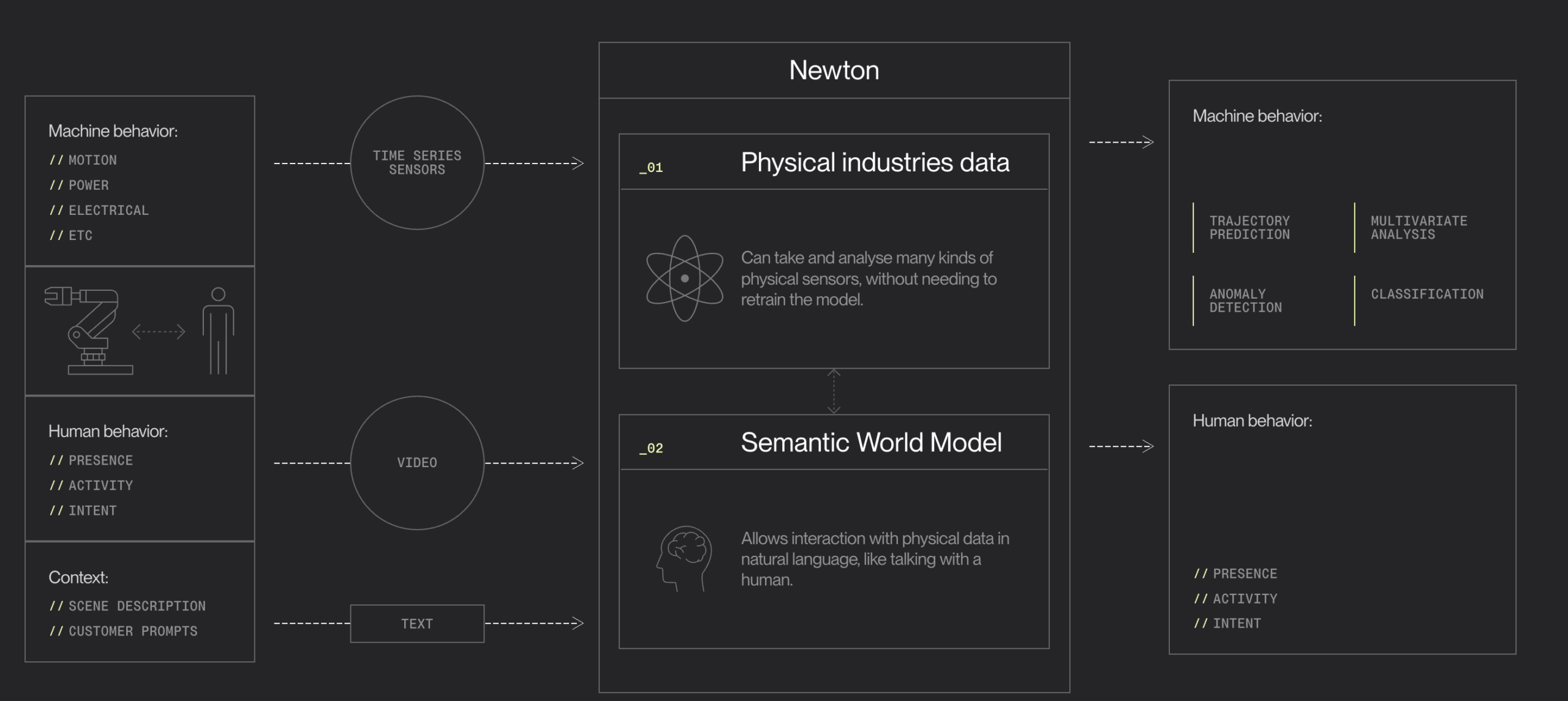
Based on a Newton TimeFusion foundational AI model that Archetype developed to build and deploy AI models in physical environments, the Physical Agents built using the Archetype Agent Toolkit can run locally in those environments to enable them to continuously interpret raw multimodal sensor data that is then used to surface insights.
That approach eliminates the need to rely on AI models deployed in a cloud computing environment that are not going to be able to address the latency requirements of machines that are processing data in real time, says Archetype CTO Nick Gillian. That capability makes it possible to deploy an AI model in the cloud or at the network edge, he adds. “It can run directly in a factory environment or in a hospital,” says Gillian.
The goal is to make it possible for anyone to ask what machines are sensing and receive clear, actionable answers, notes Gillian.
At the core of that effort is a 2-billion parameter multimodal transformer that unifies human language and time-series sensor data into a single representational embedding space. In contrast, large language models (LLMs) such as GPT-5 or Sonnet do not understand time-series signals natively. They instead approximate sensor understanding by mapping signals into textual tokens or the time-series signals have to be converted to images and input as plots. This conversion destroys essential structure and relationships encoded in raw sensor data, says Gillian.
The Archetype approach makes it possible for the Newton TimeFusion model to describe any sensor signal in natural language in a way that makes it possible to, for example, identify, detect, and explain anomalies.
That same model can also input missing data or apply operations such as filtering, smoothing, or forecasting. Finally, organizations can also use it to generate synthetic sensor signals via a natural language prompt that can be used to train and test a custom AI model.
Fresh off raising an additional $35 million in funding, early adopters of the Archetype toolkit include NTT DATA, Kajima, and the City of Bellevue, which are now testing AI agents running in warehouses, construction sites, and municipal infrastructure, respectively.
There are, of course, no shortage of potential use cases for AI at the network edge. The challenge is the speed at which insight needs to be generated to create actionable intelligence from massive amounts of telemetry data.
It’s not clear how being able to directly access any machine about what it is sensing will change the way they are managed, but the time it takes to diagnose and troubleshoot issues will certainly be reduced. More importantly, however, it may also become possible to more readily surface insights that, for example, improve safety.
Regardless of the use case, the one thing that is starting to become apparent is that the way humans interact with machines is about to fundamentally change.
