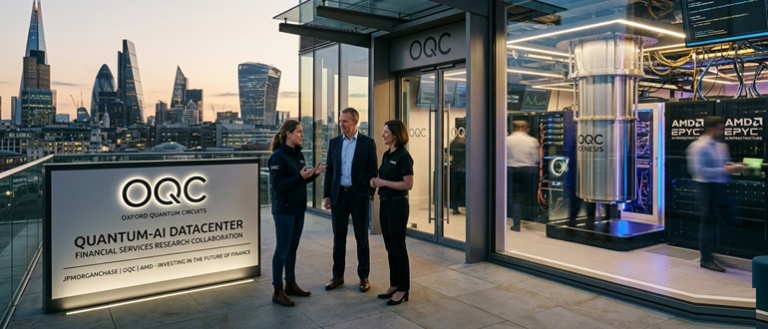
OQC, JPMorganChase & AMD to Develop Quantum-AI Project, in London
OQC, JPMorganChase, and AMD partner to launch a dedicated Quantum-AI datacenter in London, moving quantum computing from the sandbox to financial services.


OQC, JPMorganChase, and AMD partner to launch a dedicated Quantum-AI datacenter in London, moving quantum computing from the sandbox to financial services.

The focus for enterprise AI is shifting. As Techstrong’s Alan […]

At the SAP Sapphire user conference in Orlando this year, […]
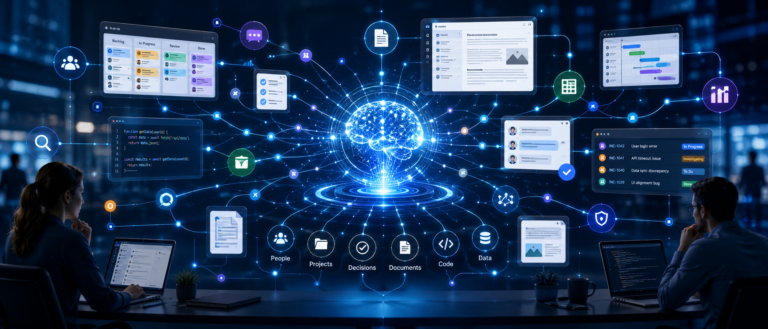
Collaboration and productivity software company Atlassian is widely known across […]

Adaption and Together AI have integrated their platforms to streamline enterprise AI fine-tuning, promising 82% average gains in dataset quality and training cycles that drop from weekly to hourly.

SAS Innovate 2026 saw the company host its practitioner and partner event in Grapevine, Texas, this month to explain how its data platform now becomes an AI-first choice.
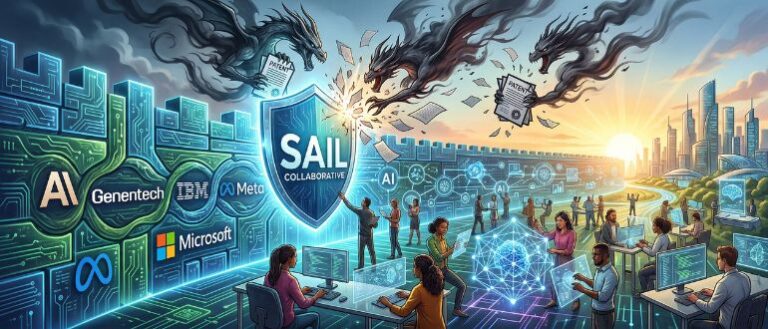
The SAIL Foundation, backed by IBM, Meta and Microsoft, launches a shared patent commons to protect AI foundation models from patent trolls and reduce legal friction to accelerate R&D innovation.

Overview of Perplexity’s expanding AI platform—Perplexity Computer, Personal Computer, Comet Enterprise, and four developer APIs (Search, Agent, Embeddings, Sandbox)—positioned for enterprise research, agentic workflows, secure integrations, and paid premium data sources.

Akamai is redefining the “backbone of the internet” by moving beyond CDNs into distributed AI inference. By operationalizing the Nvidia AI Grid with thousands of Blackwell GPUs, Akamai enables low-latency, real-time AI at over 4,400 edge locations. This massive network optimizes “tokenomics” through intelligent orchestration, reducing costs while powering agentic and physical AI. From liquid-cooled chips to Gecko nodes, discover how Akamai is scaling intelligence to the point of contact.

Solidatus AI Lineage Assistant is a new agentic AI tool designed to give data science and software application development teams audit-ready lineage to meet the most stringent regulatory demands at speed, but there’s also full human oversight.
