
AI Down on the Bayou
Meta’s Hyperion project may bring hope and investment to a struggling Louisiana parish, but it also reveals how AI infrastructure is rewriting the rules of economic development, energy consumption and political influence.


Meta’s Hyperion project may bring hope and investment to a struggling Louisiana parish, but it also reveals how AI infrastructure is rewriting the rules of economic development, energy consumption and political influence.
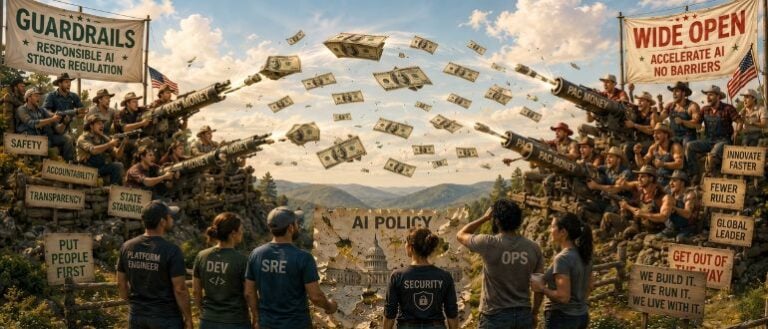
Anthropic’s super PAC and OpenAI’s super PAC are spending a combined fortune fighting each other in the midterms. The policy argument underneath is real. The feud has swallowed it whole.

A proposed gigawatt-scale AI data center in a Montana town of 140 people shows why the next phase of the AI race gets won or lost on power, land and community trust, not on benchmark scores.
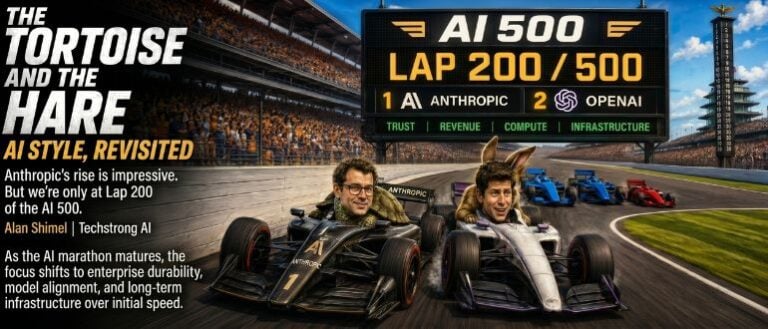
The AI race is shifting from viral hype to enterprise economics. Anthropic’s massive valuation growth proves that trust, sustainability, and clear ROI are challenging OpenAI’s early consumer lead.

Futurum’s acquisition of ETR has been described as a combination […]

The reason isn’t that AI has become a religious issue. It is that AI is increasingly becoming a human issue. The debate is moving beyond coding assistants, content generation and productivity gains into questions of meaning, work, authority, morality and the future organization of society itself. Those subjects have historically been the domain of religion, philosophy and culture. What’s striking about Magnifica Humanitas is that it is not an anti-technology document. Pope Leo acknowledges the potential benefits of AI and repeatedly emphasizes that technology itself is not the problem. His concern is what happens if societies become organized around machine efficiency rather than human flourishing.

Anthropic’s reported profitability isn’t just a milestone for one AI company. It may mark the moment the industry shifts from competing on intelligence to competing on economics.

While newcomers scramble to rebrand around ChatGPT, Automation Anywhere leans on two decades of enterprise reality to introduce Agentic Process Automation (APA). This coverage of Imagine 2026 cuts through the standard artificial intelligence hype, delivering Mihir Shukla’s disruptive blueprint for the “Autonomous Enterprise”: automate 80% of operations, triple employee productivity, and break the bloated SaaS seat-licensing model entirely.
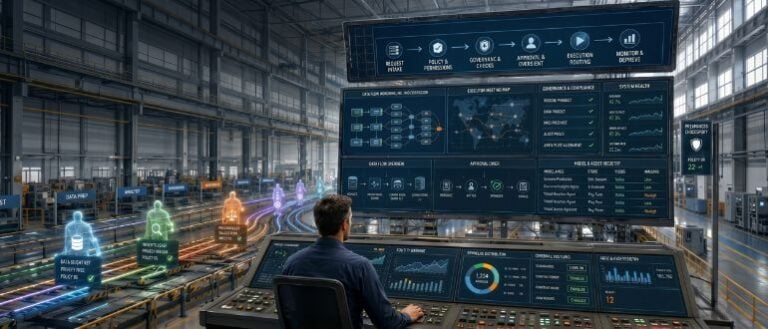
The companies that ultimately win the enterprise AI market may not necessarily be the ones with the smartest models. Those models are increasingly becoming accessible commodities. The bigger challenge is operationalizing institutional knowledge in ways enterprises can trust.

The fight over AI infrastructure will not be decided by models alone. It will be decided by who controls orchestration, governance, execution and interoperability. Detailed analysis of the emerging enterprise risk around AI infrastructure lock-in, highlighting why open standards and open source control planes are essential to preserving long-term operational leverage.
