
TL;DR — Key Takeaways
– Kong introduced Volcano, a platform for building and deploying AI agents, alongside an updated AI Gateway with expanded governance and cost-control capabilities.
– Kong AI Gateway 2.2 adds declarative deployment of MCP servers and support for Microsoft Foundry, Amazon SageMaker, Kimi and Jev.
– Future Kong Konnect updates are expected to add an AI registry and catalog, context mesh, token vault, AI observability and spending-tracking tools.
Kong Inc. this week added a platform for building artificial intelligence (AI) agents while at the same time updating its AI gateway to provide organizations with the governance capabilities needed to minimize costs.
Announced at the company’s API + AI Summit, Kong also revealed that future updates to the Kong Konnect application connectivity platform will add support for an AI registry and catalog, a context mesh for discovering backend services, AI observability capabilities, a token vault, tools for tracking AI spending and a Webhook Engine to drive event-based applications.
The Volcano platform for building AI agents is designed to be used either standalone or in conjunction with the AI gateway provided by Kong to access a built-in content delivery network (CDN) and authentication services. The overall goal is to provide builders of AI agents with access to a gateway through which it becomes simpler to provide an AI agent with access to any number of backend services, says Kong CTO Marco Palladino.
Builders of AI agents, for example, can now provision PostgreSQL databases in seconds, with built-in backups and vector support for AI workloads, including branches. “Building and deploying AI agents today is fragmented,” says Palladino. “We’re making it as easy as possible.”
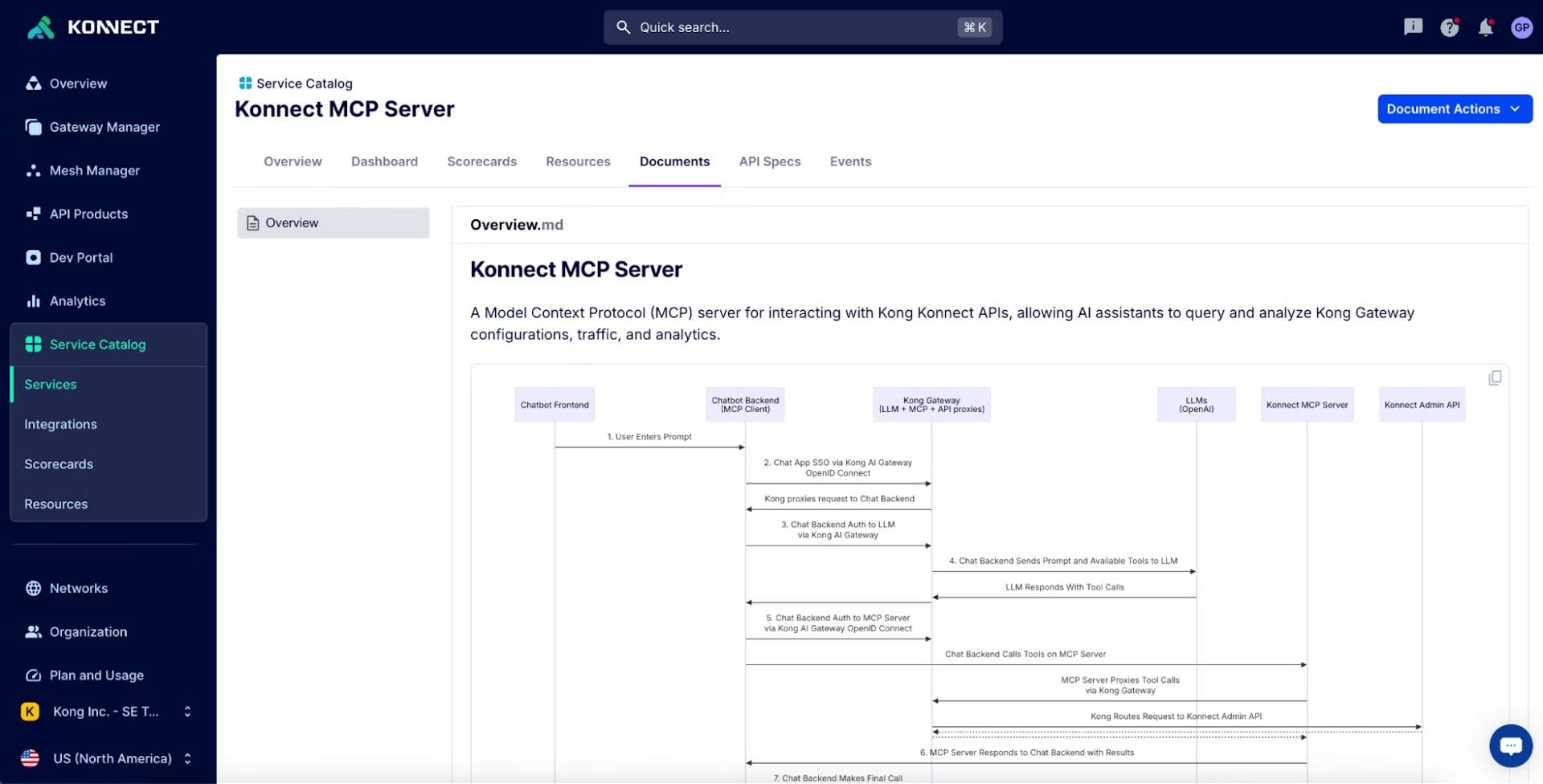
With the release of version 2.2 of the Kong AI Gateway, Kong, in addition to embedding cost-control capabilities, also now makes it possible to declaratively deploy Model Context Protocol (MCP) servers. Kong also is adding support for the Microsoft Foundry and Amazon SageMaker platforms along with Kimi and Jev AI models.
It’s not clear at what rate organizations are deploying AI gateways, but they provide a layer of abstraction through which organizations can give AI agents access to backend services in a way that can be centrally governed and managed. There is already no shortage of AI gateways. The challenge now becomes determining which AI gateway provides the most governance capabilities for accessing headless backend services that AI agents are dynamically invoking in ways that are difficult to predict.
Unfortunately, in many organizations the proverbial AI agent horse is already before the cart. Deployment of both sanctioned and unsanctioned AI agents is well ahead of most organizations’ ability to effectively govern what will soon become thousands of AI agents strewn across the enterprise. As such, the need to deploy some type of AI gateway through which security and compliance policies can be enforced is becoming more pressing with each passing day.
Regardless of how governance of AI agents is achieved and maintained, the probability that there will be multiple security and compliance incidents involving AI agents is high. As such, IT teams need to rapidly deploy some type of gateway to first minimize the number of those incidents while simultaneously putting in place the processes needed to respond to incidents involving AI agents. The fundamental challenge, of course, is that AI agents operate at machine speed, which means the potential blast radius of an incident is going to increase exponentially with each passing second.
