
“Dreams of Violets” is the first AI-generated feature film to be accepted at a major film festival. The 75-minute film, which will debut June 10 at the Tribeca Film Festival in New York City, is the talk of the film industry as it was created for just $2,000. Ironically, the film’s director isn’t that big a fan of AI.
“Dreams of Violets” is a fictional dramatization of events surrounding the massacre of Iranian civilians by government forces in January in which thousands were reportedly killed. While every image and person in the film is AI-generated, the film is based on journalist’s reports, thousands of photographs, and eyewitness accounts, say the film’s creators, two Iranian brothers named Ash and Pooya Koosha.
“What moved us was not just the technological achievement but the emotional immediacy and urgency of the story itself,” said Jane Rosenthal, co-founder of the Tribeca Film festival.
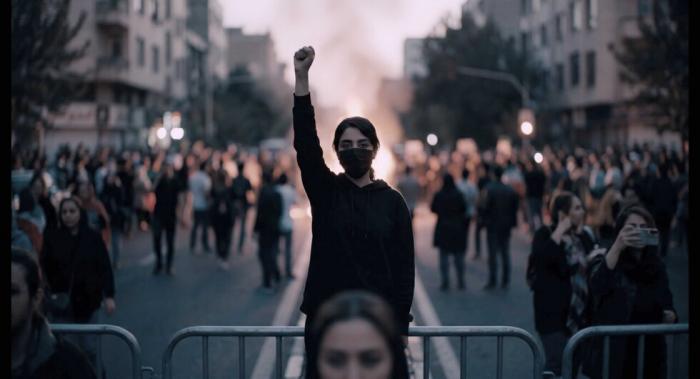
Photo Credit: Dreams of Violets
In creating “Dreams of Violets,” the brothers have become leading experts on the use of AI in film. The pair founded Claigrid, Inc., a company devoted to democratizing access to agentic AI with a particular focus on people needing supplemental sources of income. Their film company, Fountain 0, aims to democratize long-form storytelling using AI. The brothers have developed proprietary elements that helped refine the film’s creation. Director Ash Koosha created “Dreams of Violets” over a two-month period, a timeline that could have been reduced to three weeks if he hadn’t a day job. Former NBC executive Tom Rogers is the executive chairman of the startup. Fountain 0 has additional films in the pipeline.
“This will understandably bring chills down the spine of many in Hollywood,” says Ash Koosha. “However, for independent film makers, whose biggest barrier is access to money to make their films, Fountain 0 solves the financial barriers they face. As a first time film maker, there is no way I could have brought this film to fruition without what our AI tools enabled me to do.”
AI in film is facing barriers, however, with restrictions put in by the Academy of Motion Pictures requiring films up for Oscar contention have acting and writing performed by humans. AI tools are allowed for production and visual effects. Gemini and Nanobanana were among the AI tools used in the making of “Dreams of Violets,” according to industry reports.
Ash Koosha notes that while the imagery in “Dreams of Violets” is all AI-generated, the script, editing, and sound elements are the human part of the equation. At the same time, Ash Koosha, like most of the film industry, is “worried what the unknown implications are for the livelihoods of many. New types of jobs will undoubtedly be created in the AI film generation.”
Those new jobs might be variants on existing ones, suggests Ash Koosha. Film professionals who specialized in such on-set skills such as lighting and sound design, for example, may be able to do the same as consultants for AI films looking for realism.
In addition, creating a quality AI film may not be as easy as it might initially appear. “Models respond a lot better when used by someone who knows the craft, who knows the creative work,” Ash Koosha told CBS News in an interview. Storytelling skills still matter.
