
Planview has added a Connected Work Graph to an artificial intelligence (AI) framework it has integrated across its portfolio of project management applications.
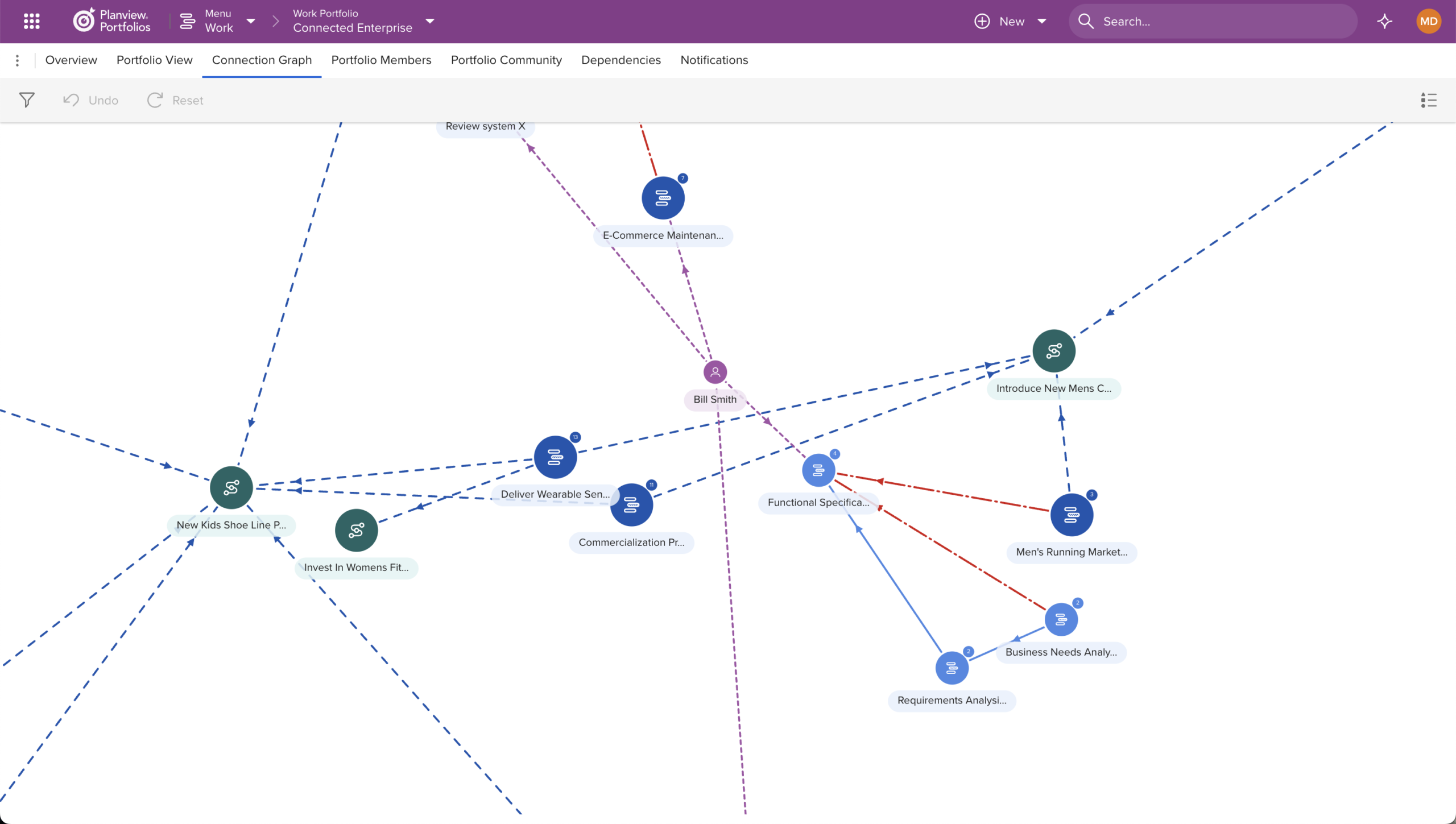
The Connected Work Graph enables AI agents that the company has developed to use the Planview Anvi framework to surface dependencies between tasks and workflows in real time, says Louise Allen, chief product officer for Planview.
Those AI agents are capable of analyzing millions of work connections and patterns to identify obstacles and bottlenecks as they emerge. They also deliver recommendations based on organizational work patterns to both help resolve those issues. “You can visualize all the relationships,” adds Allen.
Planview has also made available more than 60 connectors to enterprise applications to enable the Connected Work Graph to provide a single source of truth spanning all the relationships within an organization, she notes. That approach also ensures that AI agents are only accessing data they have been granted permission to analyze, she adds.
Additionally, Planview has developed alliances with Snowflake, Amazon Web Services (AWS) and Anthropic to provide access to both additional data sets and foundational AI models.
The overall goal is to enable business and IT leaders to make better strategic decisions based on an analysis of data that is now being surfaced from deeper levels within the organizations, says Allen.
That capability also makes it easier to track outcomes and key results (OKRs) to make adjustments as required, she adds. Armed with those insights, it becomes easier for business and IT leaders to be more confident that the organization as a whole is working on the right things at the right time, notes Allen.
It’s not clear how rapidly organizations are applying AI to project management, but there is a clear opportunity to make better decisions. Far too many business and IT leaders have been making strategic decisions based on ill-informed suppositions for decades. While AI is not infallible, it does provide an opportunity to quickly analyze a massive amount of data that otherwise would not be factored into a decision. The simple truth is that much of the friction that exists between business and IT leaders and the rank and file of an organization can be traced back to decisions that were made without fully understanding the issues and challenges the organization faces daily.
Each organization will need to determine to what degree they will revisit strategic planning in the age of AI, but the days when business and IT leaders might be forgiven for making decisions without all the facts at hand are coming to a close. Rather than hoping the right data has been loaded into an analytics application, AI agents that have access to a knowledge graph should be able to continuously access and analyze all relevant data instantly.
That doesn’t necessarily mean circumstances beyond the control of business and IT leaders might not change, but it should, hopefully, reduce the number of instances where decisions are based more on wishful thinking than actual facts.
