
AI in the enterprise has finally shifted from experimentation to operational reality. Organizations are now focused on operationalizing AI responsibly, efficiently, and at scale. At NetApp INSIGHT 2025, NetApp introduced a major evolution: a shift from unified storage to unified intelligence.
The Tech Field Day (TFD) Experience Delegates had front-row seats to hear from NetApp’s teams about the new offerings.
AI’s Real Bottleneck: Data, Not Compute
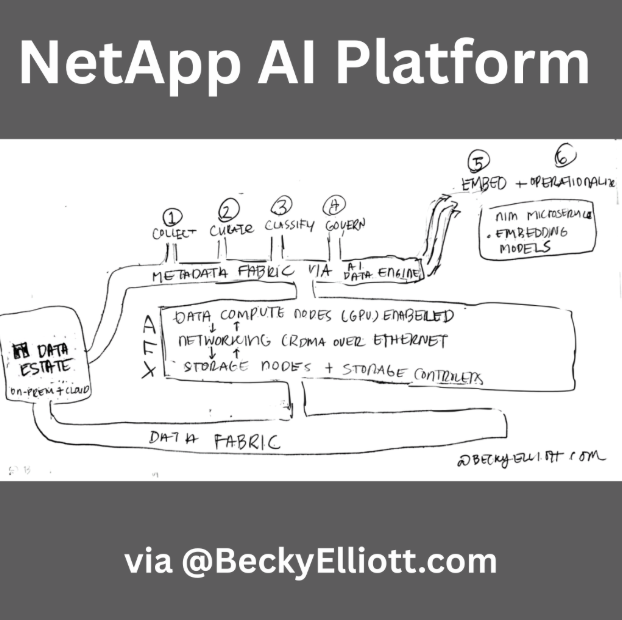
One dominant theme from TFD delegate discussions was that AI success hinges on data quality, control, and accessibility, not GPUs alone. As Delegate and storage admin Becky Elliott noted, “Poor data management risks the very thing AI depends on.” Without unified data governance and strong metadata, AI pipelines quickly become fragmented, brittle, and risky.
Data governance expert Karen Lopez reinforced the same idea: AI requires data management inside the storage layer, not bolted on afterward. Traditional storage that focuses on performance, uptime, and capacity is no longer enough. AI demands context, classification, protection, and intelligent data services.
NetApp’s new unified data platform includes the AI Data Engine (AIDE), AFX (a new disaggregated storage architecture), first-party cloud-native offerings, and cyber resilience and governance guardrails.
These capabilities build on NetApp’s long-standing data fabric vision. As IT consultant Jason Benedicic noted, NetApp’s hybrid cloud and virtualization work have prepared it for this moment.
AIDE: The Engine Behind NetApp’s Unified Intelligence Platform
Unified intelligence is an integrated data architecture where storage, metadata, governance, and AI-driven discovery work together to make enterprise data easier to find, prepare, and use for AI workloads.
One of the most important announcements was, in my view, AIDE (AI Data Engine). AIDE blends metadata intelligence, semantic discovery, vectorization, governance and policy enforcement, integrated data movement, and support for NVIDIA AI Enterprise.
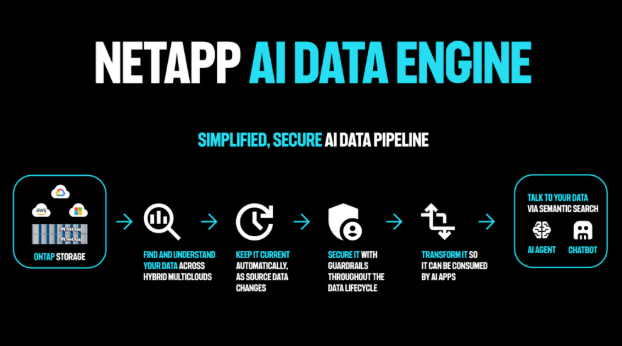
Karen Lopez summed it up best: “AIDE helps you find data, clean it, organize it, and use it.”
That’s a significant shift for a company historically rooted in storage. AIDE has strong potential, but enterprises will expect more maturity signals.
AFX: Solving the GPU–Storage Lifecycle Mismatch
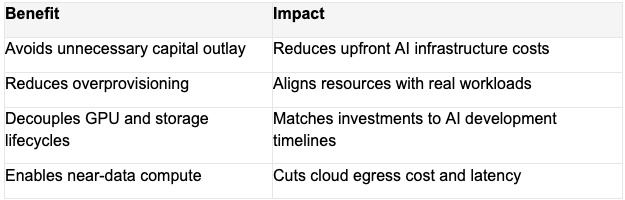
One of the biggest challenges I see in AI architecture planning is the mismatch between GPU refresh cycles (~18 months) and storage refresh cycles (3–5 years). NetApp’s AFX architecture directly addresses that.
As I observed in my own write-up, AFX lets organizations scale compute and storage independently.
Benefits of the Disaggregated AFX Model
Delegate Denny Cherry praised AFX’s modularity and openness, calling it refreshingly pragmatic in a market full of monolithic AI stacks. Still, enterprises will want clarity on migration paths, partner support, and operational tooling. AFX is a promising shift, but success will depend on execution.
Cloud: Strong Differentiation, But Messaging Needs Refinement
NetApp highlighted its “first-party cloud-native storage across AWS, Azure, and Google Cloud” many times. This feature is important for hybrid AI pipelines. It lowers friction in multi-cloud deployments, provides unified governance, and decouples compute and storage for cost control.
But as I pointed out during the event, customers care more about outcomes than being “first.”
Cyber Resilience: Core Strength, Understated Spotlight
Cyber resilience didn’t get much stage, but it remains critical as AI-driven threats increase. Some capabilities NetApp highlighted:
- Storage-layer PII/PHI redaction
- Ransomware isolation
- Policy-driven governance
Delegates saw these as solid but under-messaged. Enterprises want AI-specific threat modeling, ransomware response scenarios, and more transparency into how NetApp protects AI pipelines end-to-end.
Why NetApp’s Unified Intelligence Strategy Matters
After digesting the announcements and listening to many smart voices in the Tech Field Day community, here’s my conclusion:
NetApp’s shift from unified storage to unified intelligence is the right move at the right time.
The company’s strengths line up with real enterprise needs, but there are gaps in migration complexity, real-world maturity, integration with Non-NetApp systems and governance tools. Enterprises will want early validation from real customer deployments.
Next Steps for Executives Adopting Unified Intelligence
If you’re evaluating NetApp as part of your AI strategy, here’s where to focus your due diligence:
- Data readiness and governance alignment
- How AFX integrates into your current infrastructure lifecycle
- Whether AIDE’s capabilities match your AI roadmap
- Multi-cloud operational consistency
- Cyber resilience tied directly to AI workloads
Evaluate NetApp as a data intelligence partner, not just a storage vendor. If they execute on this vision, they could play a foundational role in AI-ready enterprise architecture.
