
Enterprise IT is a high-stakes environment. A single system failure, a missed software update, or a slow application can ripple through your entire business, leading to lost revenue and frustrated customers. For years, IT operations teams have battled these issues reactively, often buried under a mountain of alerts. But what if there was a way to get ahead of problems before they even start?
At AI Field Day 7, Digitate presented on how their ignio platform is making this vision a reality. By leveraging a powerful combination of observability, AI-driven insights, and closed-loop automation, ignio is transforming IT operations from a manual, reactive function into a proactive, autonomous engine for business growth. Let’s explore how this agentic AI platform is delivering real-world impact.
The Journey to Autonomous IT
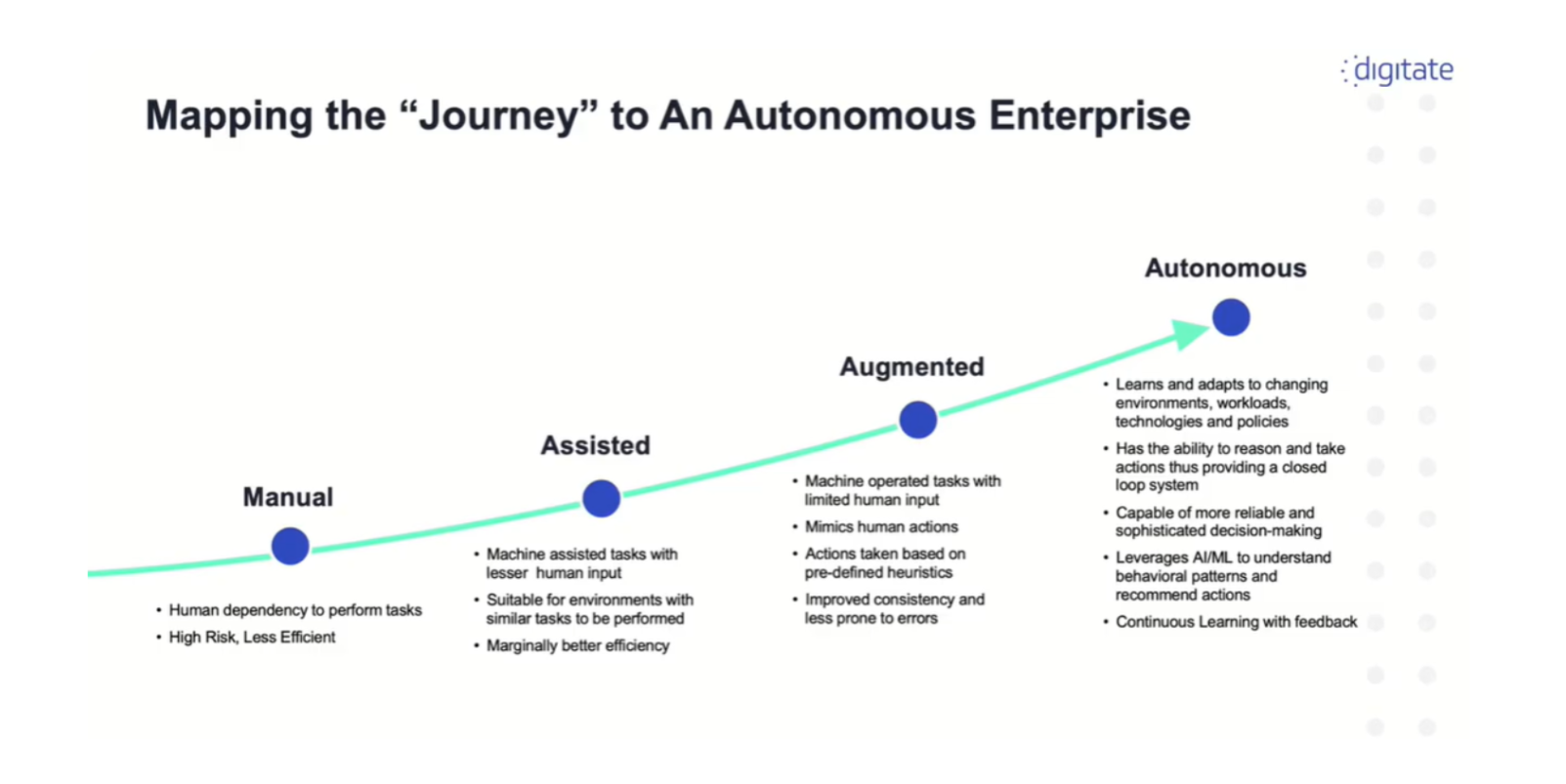
The path to a fully autonomous enterprise is a journey of maturation. Most organizations start with manual operations, relying on the implicit knowledge of experienced engineers. From there, they may move to assisted or augmented models, where machines help with task automation and actions based on pre-defined heuristics.
The ultimate goal, however, is an autonomous state where IT systems can learn, adapt, and act on their own.
ignio thrives in an autonomous state. It uses a “composite AI” approach that blends three types of reasoning:
- Logical Reasoning: Deterministic, model-based AI that uses an enterprise “blueprint” to understand your IT landscape and automate resolutions for known issues.
- Analogical Reasoning: Generative AI that provides insights and suggests fixes for new or unknown scenarios by drawing on a general book of knowledge.
- Assisted Reasoning: A collaborative loop where human experts confirm, refine, and teach the AI, enhancing its effectiveness for your specific environment.
This three-pillar approach allows ignio to resolve a vast majority of issues on its own while learning from human expertise to handle the exceptions.
Shifting from Reaction to Prevention
Beyond automated resolution, ignio excels at proactive problem management. The platform can identify recurring issues and mine for “sequence anomalies”—chains of seemingly unrelated events that lead to a major incident.
For example, ignio might detect a pattern where a backup job causes high I/O, which fills a disk, slows a message queue, and ultimately leads to an application failure. By presenting this evidence, the platform empowers problem managers to fix the root cause, permanently eliminating the issue instead of just fighting the fires it creates.
Real-World Impact: How ignio Delivers Value
The true measure of any platform is its impact on the business.
Tapestry, the parent company of high-end brands like Coach, operates 37 web fronts globally Their complex order-to-shipment process involves numerous systems where data errors could delay deliveries. By deploying ignio, Tapestry now processes over 100,000 orders seamlessly, saving millions of dollars by proactively resolving issues before they affect customers.
For a large consumer goods company with a $20 billion direct store delivery model, ignio helps ensure products reach the shelves on time. By monitoring the entire fulfillment value stream, ignio has prevented 12,000 order delays in just six months, protecting market share in a highly competitive retail environment.
Another major retailer was losing $17 million in revenue annually from pricing and promotion errors in its 9,000 stores. ignio automated the entire resolution process, recovering that revenue while also saving $5 million a year in operational costs.
Transforming IT Operations for the Future
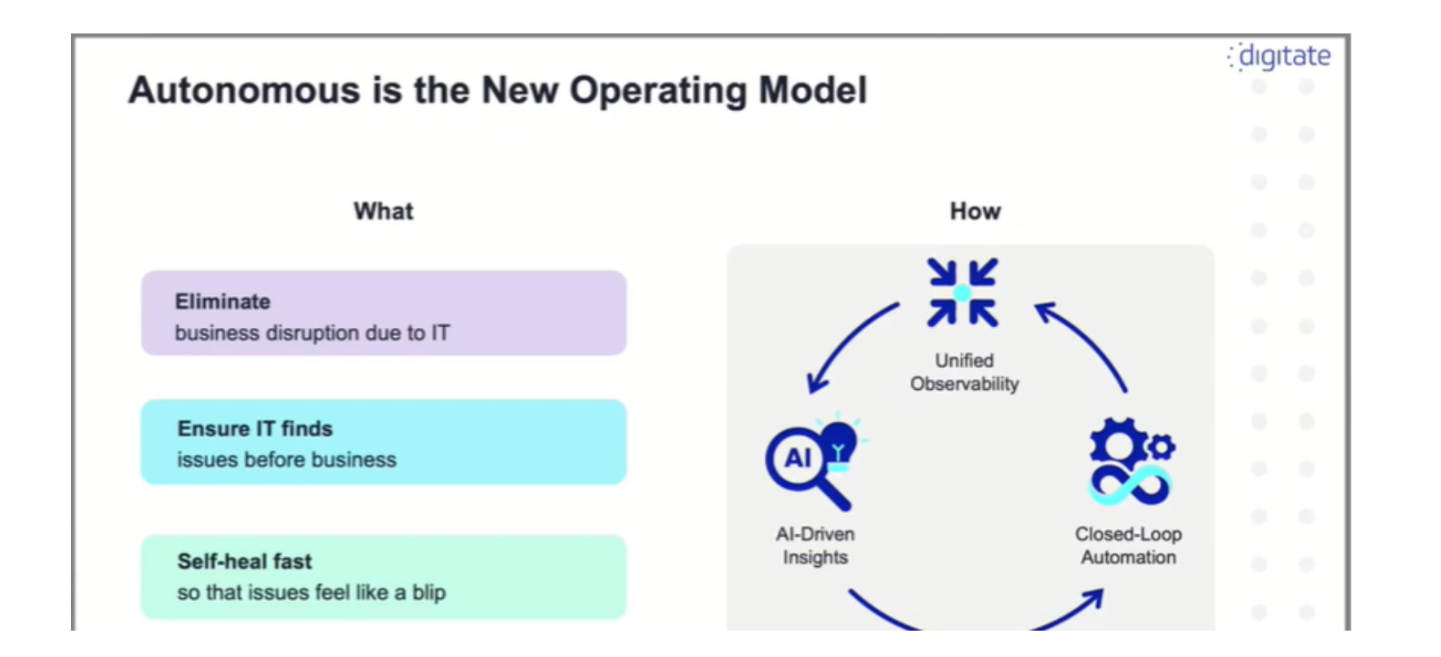
The future of IT operations is not about having more people staring at dashboards. It’s about empowering smaller, more strategic teams with AI agents that handle the noise, automate the resolutions, and provide the insights needed to drive continuous improvement. By transforming IT issues into mere blips, ignio allows your business to focus on its next breakthrough.
Learn more by watching the videos from ignio’s appearance at AI Field Day 7.
