
Musk watchers might be forgiven for thinking Elon watched a lot of episodes of the famous 1980s Knight Rider TV show growing up and never got over it. Knight Rider featured a talking, AI-powered 1982 Pontiac Firebird Trans Am with a pulsing red dashboard light that signaled when the car was communicating. Musk this week touted a design review for a new artificial intelligence A15 chip that is reportedly 40 times faster than the A14 chip currently in use in Tesla automobiles, a development that might be filed under “back to the future.”
Musk’s flag waving comes as the National Highway Traffic Safety Administration (NHTSA) probes safety violations linked to Tesla’s self-driving system. NHTSA reports 58 safety violations that allegedly have led to a dozen crashes and fires with 23 injuries. The most common safety violations can be roughly categorized into two areas.
“The first type of scenario involves a vehicle equipped with FSD (Full-Driving System) proceeding into an intersection in violation of a red traffic signal,” says NHTSA. “The second type of scenario involves FSD commanding a lane change into an opposing lane of traffic.”
It’s unclear how the A15 will keep Teslas from running red lights or driving into opposing traffic but perhaps the increased processing power will give Tesla vehicles the chance to think twice before making dangerous maneuvers. The A15 will reportedly have eight times more computing and nine times more memory than the A14 while using less power. The A15 memory bandwidth is five times higher, which helps FSD make decisions quicker, says the marque. The issue, however, may not be how fast FSD makes a decision but rather, that it makes the correct one. Previous NHTSA probes have focused on FSD’s difficulties during reduced visibility conditions including sun glare, fog and airborne dust. Accurate decision making will be vital as Musk rolls out his Robotaxi service.
Tesla’s A15 production will begin in 2026 or early 2027, says the company. Production will occur in Samsung’s plant in Texas and TSMC’s fab in Arizona. Musk also promoted the future development of A16, A17 and A18 chips which suggests there may still be room for improvement in FSD systems equipped with A15. The new chips may be used to develop AI “world models” to better train FSD systems. Musk has mused that future “bored” Teslas might tap into a network that would allow for AI tasks while the vehicle isn’t being used. How keen private vehicle owners would be to permit an activity that reduces battery life remains to be seen.
Tesla’s new AI chips won’t be limited to use in vehicles. Musk is in a formidable position in that his new AI chips can be quickly tailored for use in a variety of hardware. One project seemingly on the table is a flying car, although details are scant for a technology that has been pursued by so many for so long. (Musk’s comments suggest that his billionaire buddy Peter Thiel might be among the few who could afford a flying car price tag.)
The new AI chips also could be used in Musk’s Neuralink project that seeks to augment human brain performance. New AI chips will likely find a home in Musk’s Optimus robot undertaking. Grok’s hallucinations on X may be less frequent or more colorful or both. And Musk’s description of the A18 chip as “out of this world” hints at its SpaceX use.
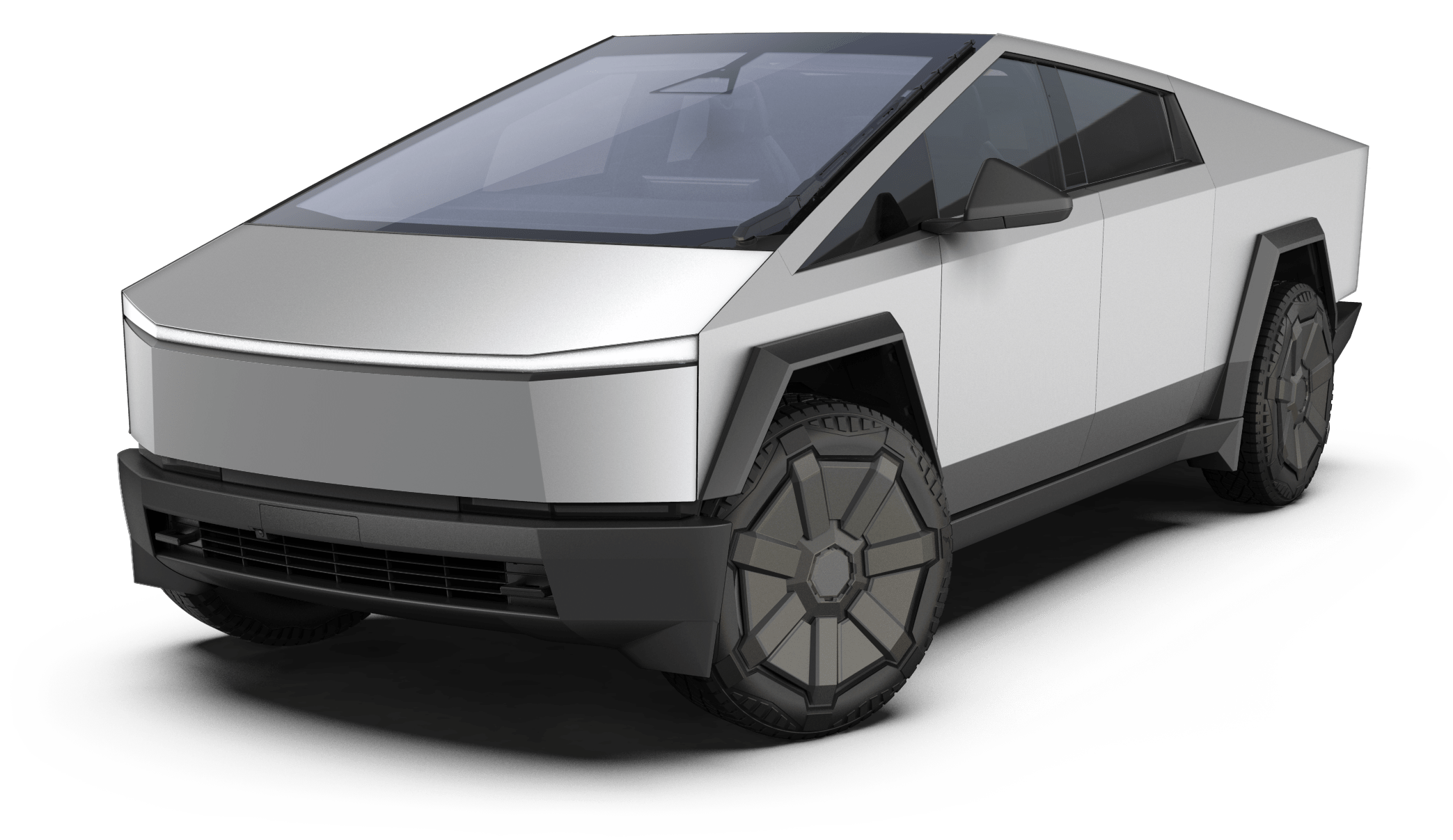
Musk’s use of AI may be limited only by his imagination. Car owners might point Musk back toward a re-watch of Knight Rider. That AI car had a protective coating that made it virtually indestructible, an attribute certainly worthy of modern AI investigation. In the meantime, Tesla owners might settle for AI improvements to quality control issues that have led to recalls to fix light bars and exterior panels that fall off Cybertrucks to name two recent examples.
“Going through walls isn’t my favorite pastime,” said the Pontiac.
