
There are eight million stories in the Naked City, famously claimed a 1948 film about New York City.
Ah, the good old days.
The big number in New York City these days is 100 billion. That’s the number of cybersecurity threats the Big Apple gets every week, according to the city’s chief technology officer, Matthew Fraser. AI is weaving its way into the tapestry of New York City through a myriad of social services but its biggest role is playing defense. AI-based threat detection helps the city distill these billions of threats down to a manageable 50 that require human intervention, says Fraser.
Those remarkable numbers were shared by Fraser at the AI Summit in New York City as the city undergoes a transition to a new stewardship under democratic socialist Zohran Mamdani. The election of Mamdani drew international attention even as Mamdani himself became a target of ugly AI-generated attack ads during his campaign.
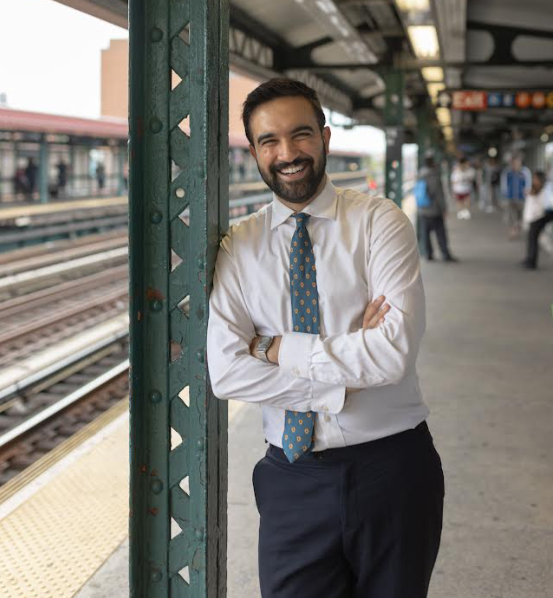
For his part, Fraser believes New York City has created a good AI foundation by consulting with AI-centric businesses like Google and academia drawn from well-respected universities like Columbia and New York University. New York City also has learned from the experiences of what Fraser calls peer world cities like London, Tokyo, Athens, and Tel Aviv, for example.
“The captain may change but the ship sails on,” said Fraser.
The previous captain, Eric Adams, has used an AI Action Plan that has functioned as a guideline for AI use by the city. AI tools have been used across public safety, infrastructure and health departments. AI pattern recognition of criminal behavior has been instrumental in deploying police officers. Among the more highly visible AI initiatives is MyCity Chatbot which has had its teething problems with erroneous headline-grabbing answers.
But now, the AI landscape is shifting once more even as the city changes leadership. Data security and privacy is a paramount issue. “Traditional data security doesn’t work,” said Fraser in an AI world where data crosses what used to be boundaries.
Mamdani, meanwhile, wants New York City to be at the forefront of shaping AI’s future but the new mayor also sees fair pricing as a civil right, an obvious pushback against AI-generated dynamic pricing based on algorithms from a mayor who plans to open affordable city-run grocery stores.
A looming challenge is if Gen AI precipitates a crisis by displacing jobs, especially high-paying white collar roles, a development that would undermine the city’s economic base harder than any transition since the decline of manufacturing, warns Hillside Securities, a leading player in the world of public finance.
But perhaps the biggest shift in New York City’s approach to AI is a regulatory one. In November, the New York City Council passed the Guard Act designed to make AI use transparent. The legislation creates an independent oversight office, sets mandatory standards for fairness and transparency and creates a public list of every AI tool the city uses. A propellant in everyone’s mind was the negative use of AI in the Mamdani campaign by Republican opponents.
The centerpiece of the legislation is a new Office of Algorithmic Data Accountability as a bark-alone watchdog. Jennifer Gutierrez, who chaired the council’s technology committee, noted that for years city departments have used AI to make decisions about housing access, policing and benefits distribution with almost no oversight, leaving residents potentially vulnerable to biased or error-prone algorithms. The legislation includes provisions for mandatory testing of AI systems for fairness and their ability to protect the data privacy of city residents.
The AI Action Plan developed by the Adams administration was a “very smartly put together paper which had a really good set of pillars and recommendations,” said Gutierrez. “But they were just recommendations. None of it was going to be enforced.”
An entity where New York City residents can appeal an erroneous or seemingly arbitrary decision by AI faces serious opposition on the federal level. President Trump issued an executive order on December 11 to challenge state and local laws regulating AI. The executive order would create an “AI Litigation Task Force” at the Department of Justice that would sue over what the Trump Administration perceives as “onerous” state and local AI regulations. The order also threatened the withholding of federal rural broadband funding from states with “unfavorable” AI laws.
Many legal observers say the executive order is illegal as states cannot be regulated in this way without Congress passing a law. Given the absence of any federal AI guidelines, the problem is one of the Trump’s Administration’s own making. Trump’s executive order also is drawing bi-partisan opposition as did Trump’s previous attempts to curb state regulation of AI. Trump’s executive order is likely to be challenged in court. Given New York City’s outsized influence and the leadership of a progressive new mayor, the Big Apple is likely to be one of those challengers. New York City is positioning itself on the frontline of the AI safety and regulation debate as the city begins a new chapter in its evolution. For the first time, AI will be a central character.
