
A wave of AI humanoid robots emanating from China, some displaying remarkable combat-ready agility, is rocking the world of robotics. The Chinese surge of “embodied AIs” marks the serious entry of AI into the physical world. The United States of America also seems poised to elevate robotics into a national priority, suggesting the field will be the next area of intense competition between the two countries. A new mantra is: robots are the physical expression of AI.
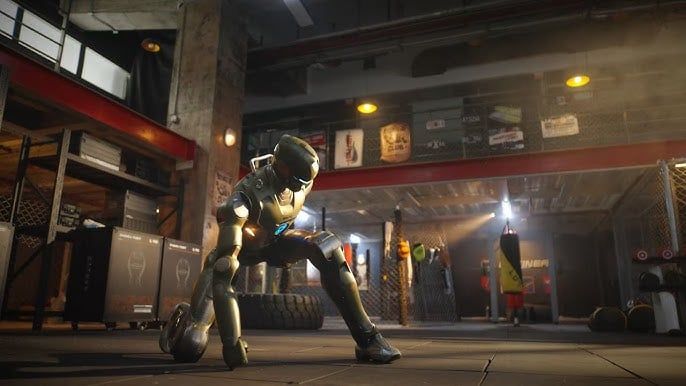
Garnering a lot of attention, bordering on disbelief in some quarters, is the unveiling of the T800, a full-scale humanoid robot designed for combat, by Engine AI that reads like a Terminator origin story. The T800 stands 5.6 feet tall and weighs 165 pounds. What’s got people talking is the T800’s remarkable dexterity of 29 degrees of freedom across its body displayed in a video released by the Chinese company. High-powered joint motors deliver up to 450 Nm of torque, which allows the T800 to deliver ninja-style flying kicks, spins, and quick directional shifts. A suite of perception tech includes 360-degree LIDAR, stereo vision sensors, and millisecond analysis of the surrounding environment for obstacle avoidance and general situational awareness. The T800 also is pretty quick with a walking speed of three meters per second.
Engine AI says the T800 is constructed out of lightweight and durable aviation-grade aluminum panels. A key element is an active cooling system in the leg joints which allows for high-intensity operation for four hours, with power supplied by lithium batteries.
The T800’s computing system includes an NVIDIA AGX module and an Intel N87 base unit that helps delivers 275 TOPS of AI processing power. Details surrounding the software suite were vague but Engine AI says the T800 supports “secondary development.” Engine AI says the T800 can be tailored for a wide range of uses ranging from logistics to hospitality. China says it will use humanoids for guard duty and crowd control at its border with Vietnam. A basic T800 costs $25,000 with three additional tiers topping out at $50,000, tags that some analysts say heralds a price war.
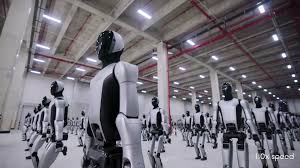
Another stunning demonstration of humanoids was delivered by Chinese robotics maker Ubtech. A small army of hundreds of its Walker S2 humanoids marched in synchronized formation across a warehouse floor and into shipping containers in footage released by the company. Ubtech says it ramped up production in November to supply companies looking for extra help on assembly lines.
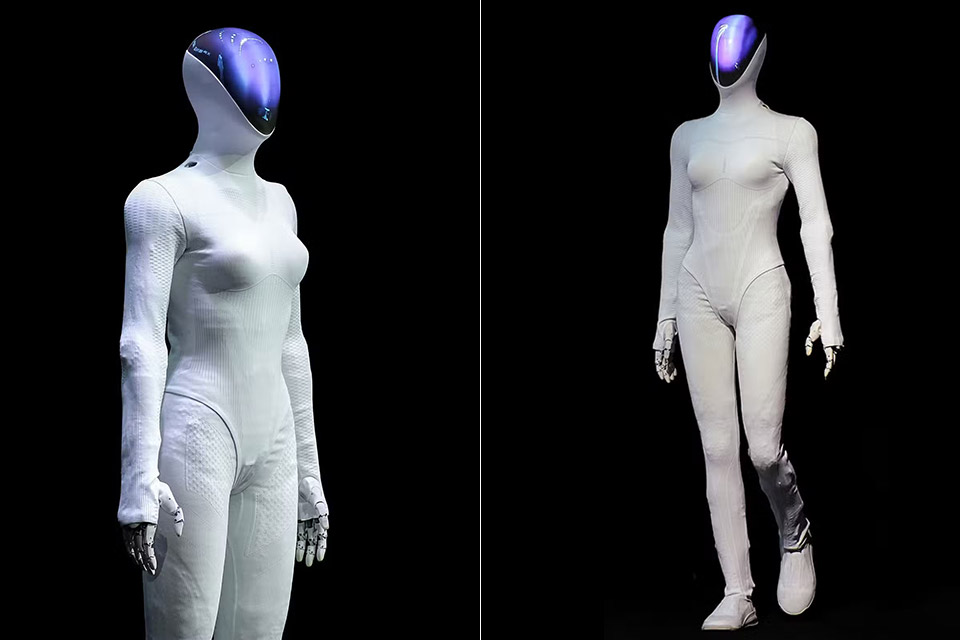
XPeng, meanwhile, is taking a more human-centric approach to humanoid design to make the journey across the “uncanny valley” more palatable to actual humans. The Chinese company’s “Iron” humanoid moves with human-like fluidity by all accounts. A bionic spine, artificial muscle and a synthetic skin move together to replicate human anatomy which can be personalized with fatter or slender body types, skin color, clothing and gender (and maybe a new, warmer name). The idea is for an AI humanoid to blend into human spaces to reduce the discomfiture of the former by the latter. How the average person distinguishes between the two remains to be seen. XPeng says Iron will go into mass production in 2026.
XPeng is an automaker so its interest in AI extends to vehicles. In November, XPeng debuted its “AI-Defined” P7 sports sedan with a self-developed Turing AI Driving Architecture promising “parking lot to parking lot” navigation across urban and highway navigation as well as a bevy of AI-driven amenities. The goal is to demonstrate how AI can transform the car into a warm, intelligent companion, says the company. Save a seat for the Iron humanoid which will undoubtedly want to come along for the ride.
AI is increasingly becoming a key trainer of robots and vehicles, especially when it comes to self-driving cars and robotaxis. While both robot and vehicle navigation has relied on sensors and cameras to maneuver through physical spaces, “world environments” are using AI to train vehicles and robots to make quick decisions about the environmental data they are getting.
Much of this simulation learning has relied on trial-and-error, supervised exercises and imitation learning from videos, for example. An alternative methodology of promise comes from a California startup called Sunday Robotics. The company just debuted a household robot named Memo that rolls around rather than using legs to perform chores in a style reminiscent of Rosey The Robot from the classic Jetsons cartoon.
What’s novel about Memo, other than its locomotion, is the way it is trained directly by humans. Sunday’s skill capture smart gloves record and analyze how people perform a wide range of household tasks, including the grip required to hold and lift objects. Sunday then built a dataset of 10 million household routines from across 550 American households. The basic approach is similar to that of a child saying to a parent: “Show me how to do it.” Sunday says Memo will literally roll out in early 2026.
Keep in mind, however, AI humanoids also may find it challenging to live up to expectations. In November, a video of a Russian AI robot named AIdol went viral after a comical, on-stage face plant after just a few steps, looking remarkably like a human who imbibed too much vodka.
Meanwhile, American robotic competitors are racing to draw even as Chinese universities rush to spin up majors in “embodied intelligence.” UMA (Universal Mechanical Assistant) is a just announced robotics company founded by a braintrust of luminaries formerly employed by Tesla, Google DeepMind. Nvidia, and Hugging Face. Elon Musk’s much ballyhooed Optimus robot is making strides running smoothly like a person. And on the advanced research front, MIT says it has developed an artificial tendon made from a hydrogel for biohybrid robots, machines built from living muscle and synthetic parts that boosts speed, strength and durability.
The Trump Administration says it’s all in regarding AI robots, although it may find it difficult to square its desire to return manufacturing to the U.S. when those factory jobs are performed by AI humanoids rather than people. The robotics industry suggests people will be employed to build robots although other scenarios see the day coming when robots build robots. Reports suggest Trump may issue an executive order concerning robotics in 2026.
Analysts say growth in robotics will be fueled by aging demographics in some countries and a shortage of workers in fields like healthcare. Robots also may be an alternative to jobs few people seem to like—warehouse employment turnover in the U.S. stands at 40%.
There’s little doubt, however, where AI humanoid robots are headed. Expect AI robots to start dancing to an updated version of the old Olivia Newton-John hit song from the 1980s: “Let’s Get Physical.”
