
The Eclipse Foundation today revealed it has added an Agent Definition Language (ADL) to its open source Language Models Operating System (LMOS) project, which it launched earlier this year to provide an orchestration layer for artificial intelligence (AI) agents.
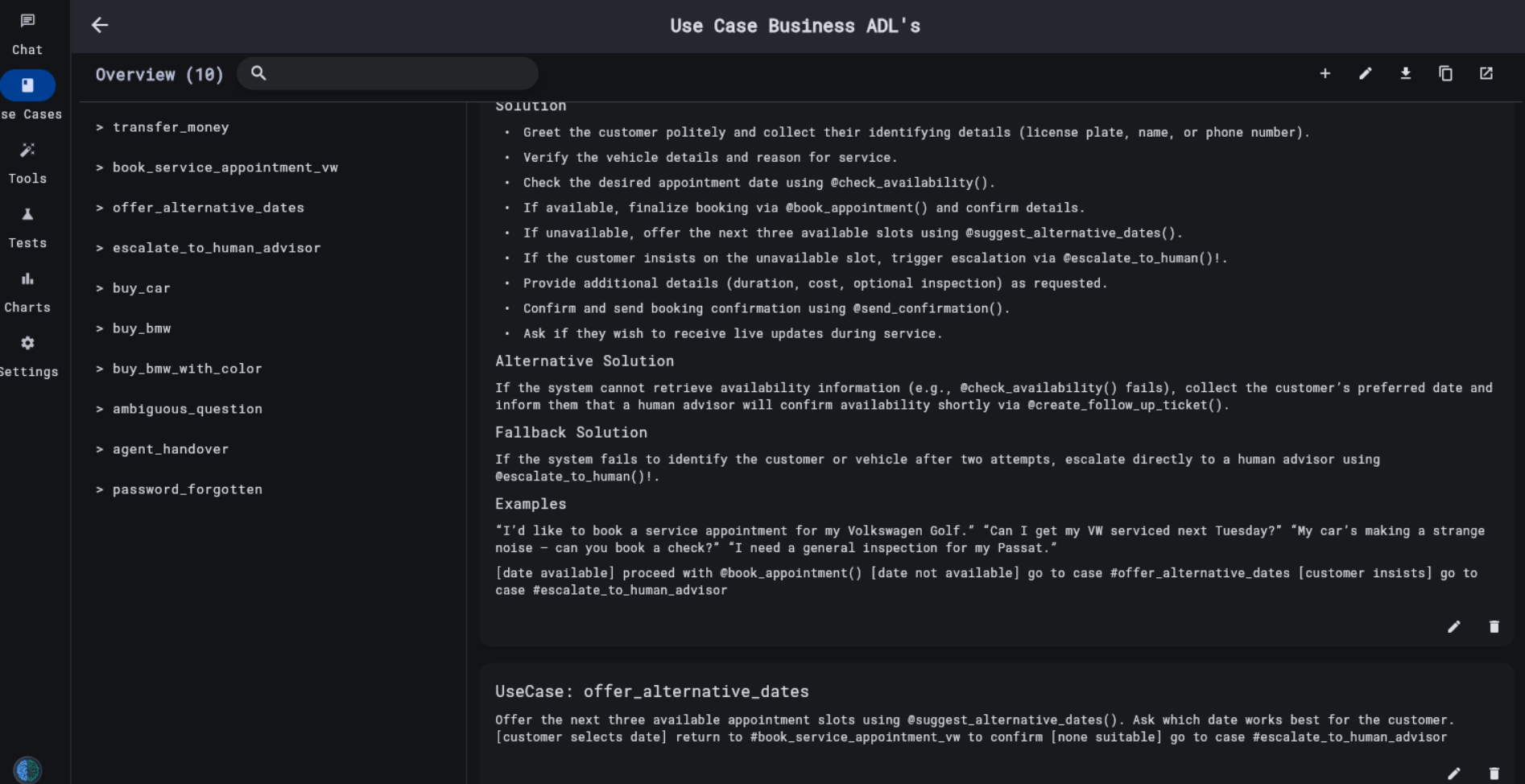
The Eclipse LMOS ADL is a visual toolkit that enables domain experts to define the behavior of agents deployed on the visual Eclipse LMOS Agent ReaCtor (ARC) framework that is based on a Java virtual machine and a runtime based on the Kotlin programming language originally developed by JetBrains.
Available in alpha, Eclipse ADL adds the ability to more easily develop, test, debug and extend AI agents via a visual interface that engineers and business professionals can collaboratively invoke to build AI agents, says Arun Joseph, Eclipse LMOS project lead.
The multi-tenant Eclipse LMOS platform is based on Kubernetes to make it simpler to scale and route resources as AI agents require in a way that enables IT organizations to deploy that platform anywhere they best see fit, he adds. That capability is especially critical for organizations operating in countries that have data sovereignty requirements, notes Joseph.
ADL extends that platform by providing a visual interface that provides an alternative to master prompt engineering techniques to build and deploy an AI agent, says Joseph. “It provides an intent-based foundation for AI,” he adds.
That Eclipse LMOS platform is already in use at Deutsche Telekom, which used it to build and deploy its Frag Magenta OneBOT assistant and other customer-facing AI systems. That instance of the platform has already processed millions of service and sales interactions
across multiple sovereign countries, says Joseph.
It’s still early days so far as adoption of agentic AI infrastructure is concerned, but interest is already running high. In fact, The Futurum Group projects that AI agents will drive $6 trillion in economic value by 2028. The challenge is finding a way to build and deploy AI agents that doesn’t lock organizations into a specific IT platform, as the types of AI agents being built and deployed become increasingly more sophisticated.
Regardless of approach, the pace at which AI agents are being built and deployed continues to rapidly accelerate. The biggest issue organizations will soon arguably face is determining which AI agents to build themselves versus opting to rely on an AI agent provided by an IT vendor. Most organizations are, for the moment, still experimenting with AI agents, so there may even be an extensive period of overlap between the capabilities of various AI agents that will soon be strewn across the enterprise.
In the meantime, IT teams would be well advised to lay a foundation today that enables them to more easily collaborate with multiple business units that all have unique requirements and preferences. After all, the only thing more challenging than building and deploying thousands of AI agents may very well turn out to be managing the multiple underlying IT platforms they run on.
