
The fight against devastating wildfires is moving to outer space. Greece, with assistance from the European Space Agency (ESA) and OroraTech, the Munich-based developer of the four-satellite constellation, is the first country with a dedicated orbiting fire detection system in place. Wildfires are an escalating problem exacerbated by climate change that causes estimated losses of $20 billion annually worldwide, a calculus also measured in human lives and the emission of billions of tons of carbon dioxide into the atmosphere across the globe.
Called the Hellenic Fire System, the four satellites are each about the size of a suitcase. Each satellite carries thermal sensors that exceed the capabilities of conventional satellites, with the ability to spot a fire just four meters (13 feet) across compared to the typical cruise-ship-sized resolution. Satellite images are analyzed with onboard edge computing and AI models that can spot an emerging fire and transmit an alarm within minutes. That information is communicated to local fire departments. The AI models filter out false alarms like solar panels and hot factory roofs. Specialized OroraTech tools include Fire Spread, which predicts fire movement, Burnt Area Mapping and land surface temperature monitoring.
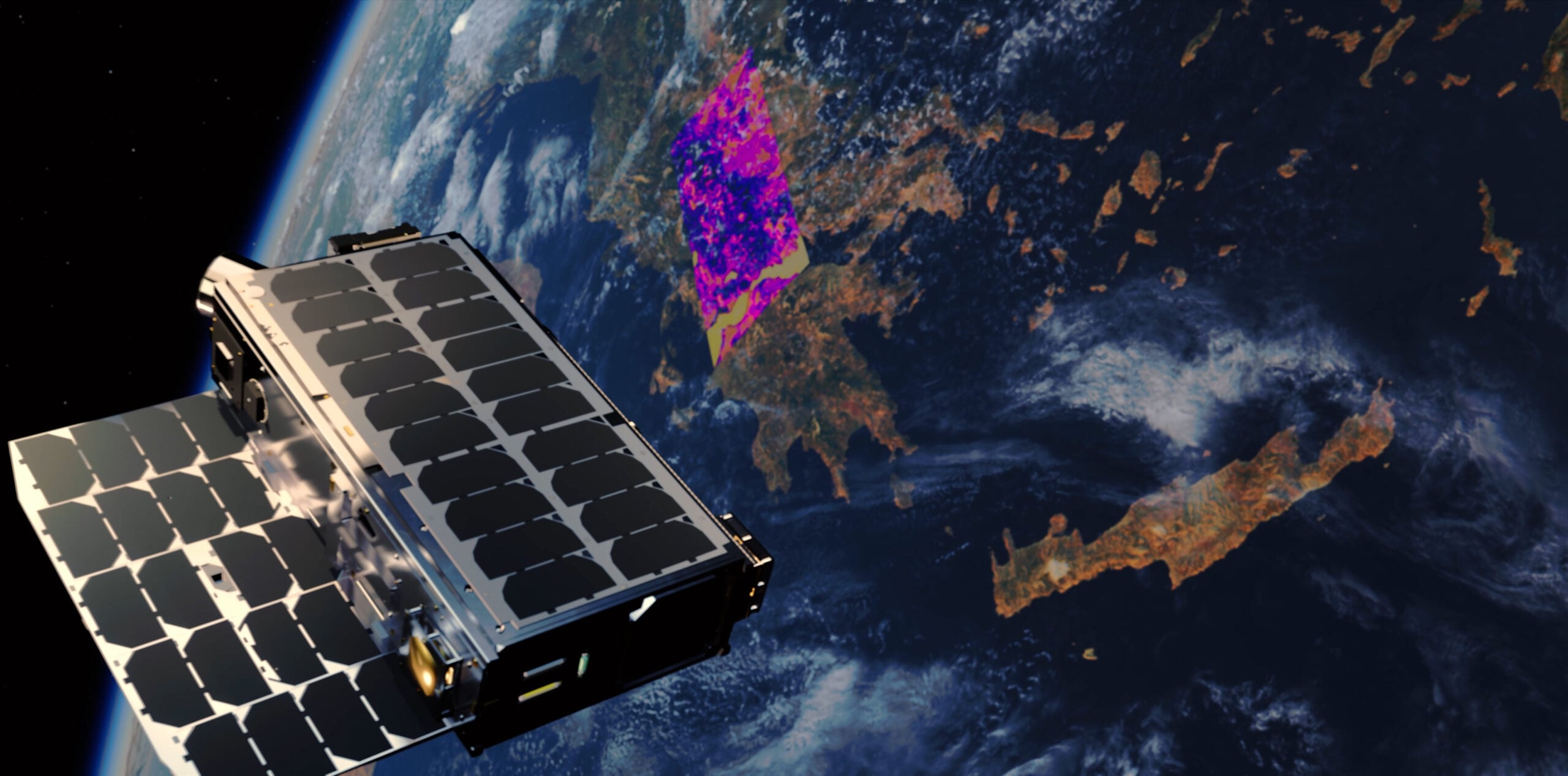
Photo credit: European Space Agency
“By integrating space-based capabilities into our emergency response systems, we are equipping our fire services with the tools they need to respond faster, act more effectively, and protect lives, property and the environment,” said Dimitris Papastergiou, Greece’s minister of digital governance and AI who oversees the program.
Each satellite is based on an 8U CubeSat platform and equipped with a deployable solar panel. Two infrared imagers operating in the midwave (to see active fires) and longwave (to see through smoke) spectral bands are able to identify thermal anomalies and assess fire intensity. The satellites can provide continuous coverage of a hot spot. Greece ultimately plans to have a 13-satellite constellation in place. OroraTech sees itself as a “thermal intelligence backbone” for fire detection.
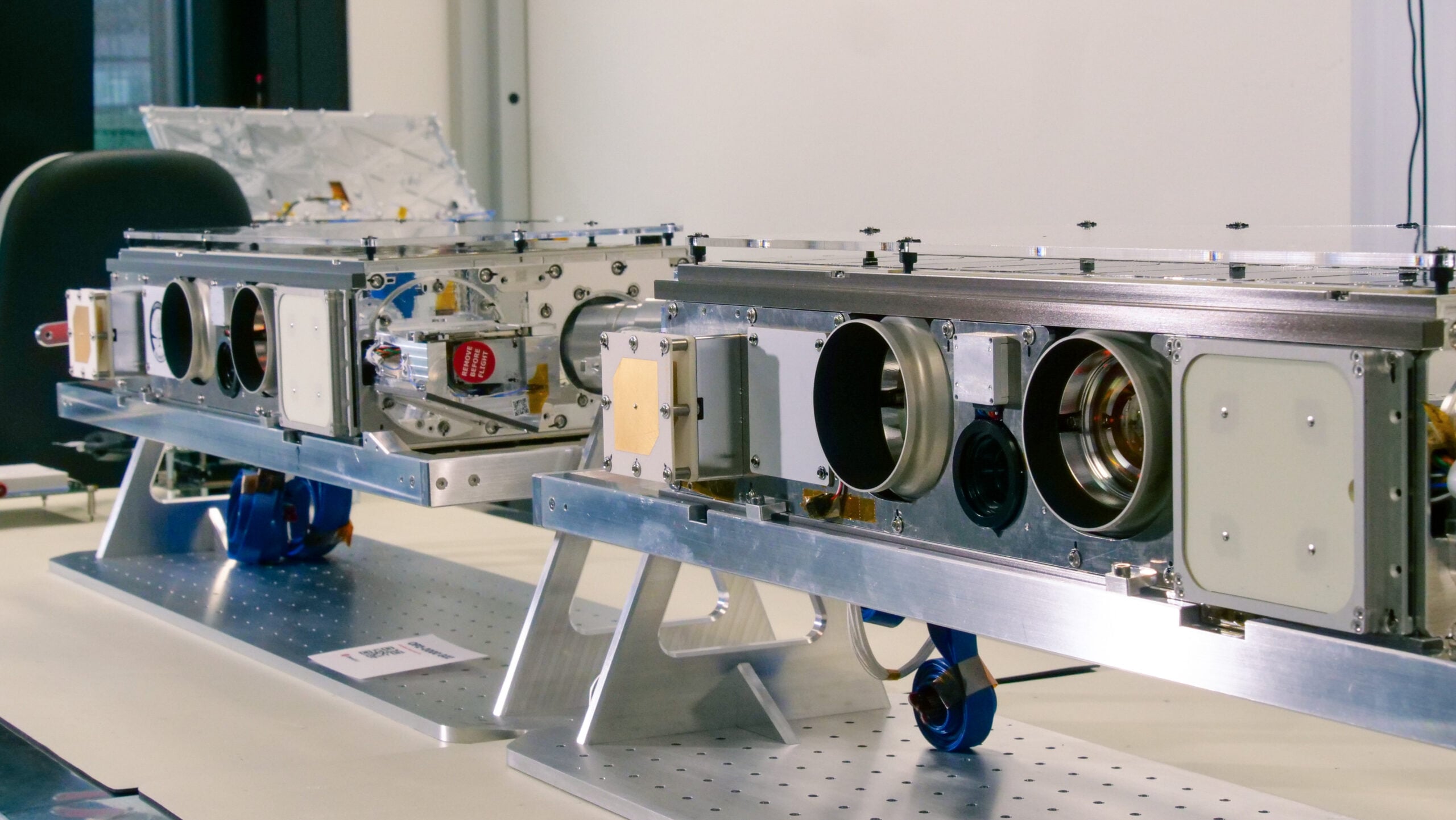
Photo credit: European Space Agency
The AI-driven platform means that firefighters in the field can react to how fires spread in real time. Fires in urban areas are quickly noticed by residents. The Hellenic Fire System will provide improved fire detection in rural areas before they have a chance to become widespread. Fire monitoring in Greece is challenging as the population is spread over more than 100 islands. Greek wildfires have become so severe in summer that evacuations have almost become routine over the past several years.
The initial cost of about $227 million comes from the European Union. One future priority is the targeting of “heat islands” so cooling centers can be deployed more efficiently during heat waves. A similar constellation also is being considered for other types of disaster response and border surveillance.
