
One year after the effective dismantling of USAID by the Trump Administration dramatically changed the shape of humanitarian aid, AI is becoming a key tool in how aid organizations accelerate and improve their responses to crises to help compensate for diminished resources.
The impact of the termination of USAID programs is so massive that it’s hard to quantify, especially as other nations followed the American lead by also reducing aid programs. A study published by The Lancet medical journal estimated that the cutbacks would cause at least 9.4 million additional deaths by 2030, with about 2.5 million of that number being children under 5. The Lancet also reported an estimated 92 million lives were saved by USAID between 2001 and 2021. Historically, foreign aid accounted for less than one percent of the U.S. federal budget.
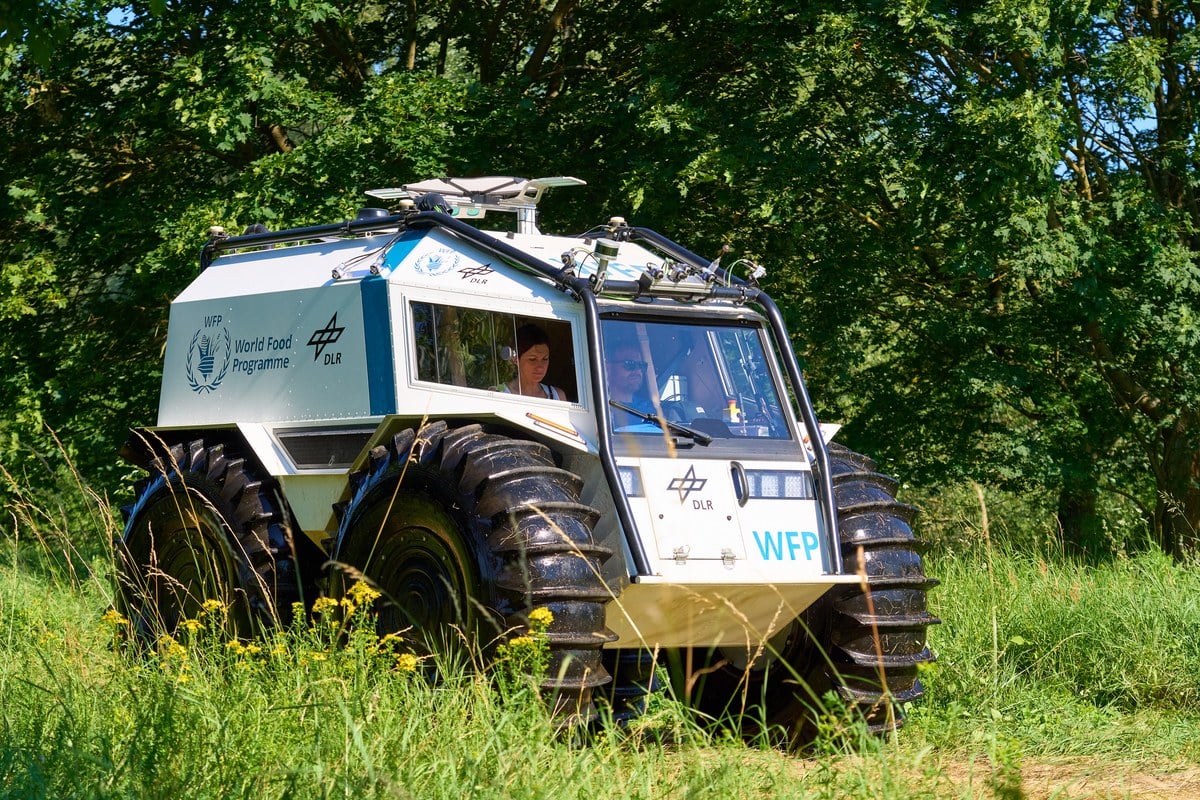
The face of AI in the humanitarian arena may just be an imposing, nine-foot-tall, all-terrain vehicle called the Sherp. While the Ukraine-built vehicle has been around for years, the United Nations’ World Food Program (WFP) is testing an AI-assisted version that can be piloted remotely through risky or remote areas. The Sherp is an amphibious vehicle with oversized wheels and fitted with cameras, sensors and a drone landing pad. The WFP is partnering with Germany’s DLR aerospace research center and the Red Cross on developing this Project AHEAD initiative.
AI’s biggest impact, however, may be out of sight and behind the scenes. The goal is to streamline information so it gets where it is needed faster. One clever, UN-backed initiative called Data Insights for Social and Humanitarian Action (DISHA) uses AI to examine anonymized mobile phone data to identify large-scale population movement during an emergency to show where people are fleeing. Another initiative uses AI to compare satellite images taken before and after a disaster to quickly assess damage to buildings after an earthquake, for example. Accurate information means emergency responders can avoid going to the wrong place when they’re needed somewhere else. AI-assisted translation and transcription means data can be collected in the language of those affected by a crisis. AI’s ability to harness predictive modeling, satellite imagery and public data also may help to identify communities prone to disaster before it strikes.
While rife with positives, the increasing use of AI in humanitarian circles may not be entirely problem-free. Humanitarian aid data can become a liability if it falls into the wrong hands, noted Amandeep Singh Gill, UN special envoy for digital and emerging technologies, at this month’s AI For Good Summit in Geneva. The concern is that information collected to deliver food or medical assistance could potentially be exploited in conflict zones, thereby putting vulnerable communities at risk. Gill supports the Digital Emblem Initiative that would be the digital equivalent of a Red Cross badge to protect humanitarian organizations and their digital infrastructure.
AI humanitarian use also is sparking worry over the creation of a digital divide between larger aid organizations and smaller frontline organizations that are less well funded. Humanitarian-focused agencies are putting the AI into “aid” but whether those benefits are evenly or widely distributed is still a question of money.
