
Airrived has emerged from stealth to deliver a platform that, in addition to providing access to pre-built agentic artificial intelligence (AI) applications, also enables end users to build their own applications using an embedded composable framework.
The Agentic OS platform creates an operating layer between the AI agents and the applications that enables end users to create composable workflows that can easily be modified without having to master complex prompts and scripts that an internal IT team would have to create and maintain, says Airrived CEO Anurag Gurtu.
Fresh off raising $6.1 million in seed funding, Agentic OS reduces the level of expertise required to both create and govern agentic AI workflows, he adds. That core capability enables organizations to fine-tune large language models (LLMs), compose deep-reasoning agents, and orchestrate workflows, notes Gurtu. “It’s purpose-built for agentic AI,” he says.
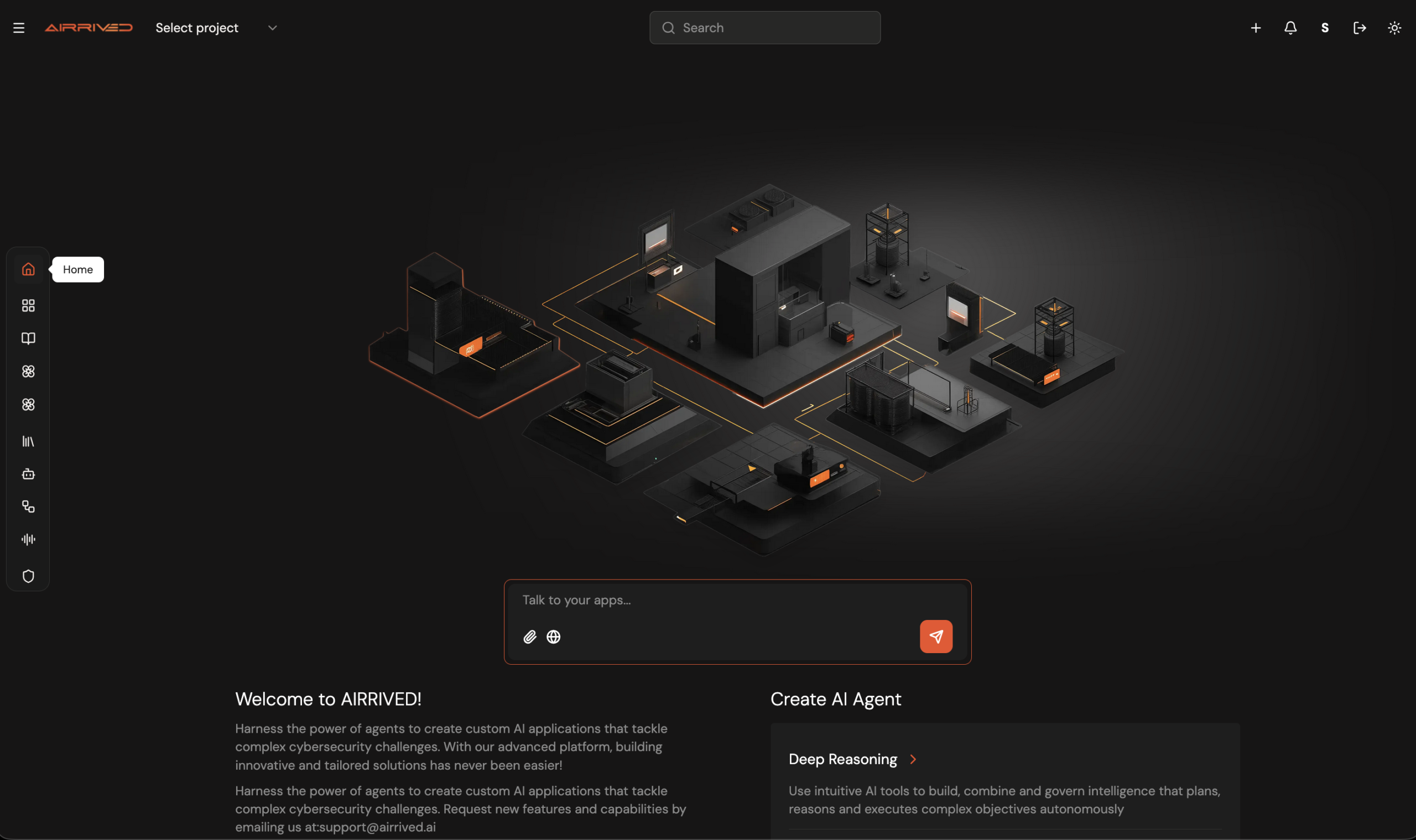
Initially, the first wave of agentic AI applications provided by Airrived are largely focused on security operations, with additional applications planned for IT operations teams. However, the goal is to make available a broad range of agentic AI applications that can be accessed via a central repository, says Gurtu.
It’s not clear to what degree organizations will prefer to buy AI agents versus build or customize them. A recent survey finds 71% of respondents are relying on some type of agentic AI capability provided by a platform vendor, with 59% working with a software-as-a-service (SaaS) application provider. More than half (51%) still rely primarily on public AI tools for AI implementation.
By comparison, less than half (47%) are working with open-source frameworks and libraries and only 32% report plans to primarily build agentic AI capabilities in-house.
Less than a third (30%) claim to have plans to deploy AI agents that are based on a common framework, compared to 22% that have one in place. In comparison, 29% said agentic AI is limited to isolated departmental use cases or in siloed deployments across multiple business units without standardization (24%).
Airrived is betting that some type of middle ground is likely to emerge that provides organizations with more control over their agentic AI applications. Most workflows span multiple applications so a platform that makes it simpler to centrally manage and govern AI agents will prove to provide a more attractive alternative to trying to stitch together agentic workflows spanning multiple software-as-a-service (SaaS) applications, said Gurtu. At the same time, organizations are going to want to be able to more easily extend those workflows using AI agents they build as needed, he added.
Regardless of approach, the one thing that is certain is most organizations will soon be employing hundreds, if not thousands, of AI agents. A recent analysis from Databricks finds there has already been a 327% increase in the number of AI agents deployed in just four months. The challenge now is finding the best way to not just build and deploy AI agents but also make it as simple as possible for end users to interact, extend and manage them as needed.
